


When communities experience floods, severe storms, and other natural disasters, the physical impacts are often easy to see. Damaged homes, washed-out roads, and debris piled along streets become visible reminders of what residents have endured.
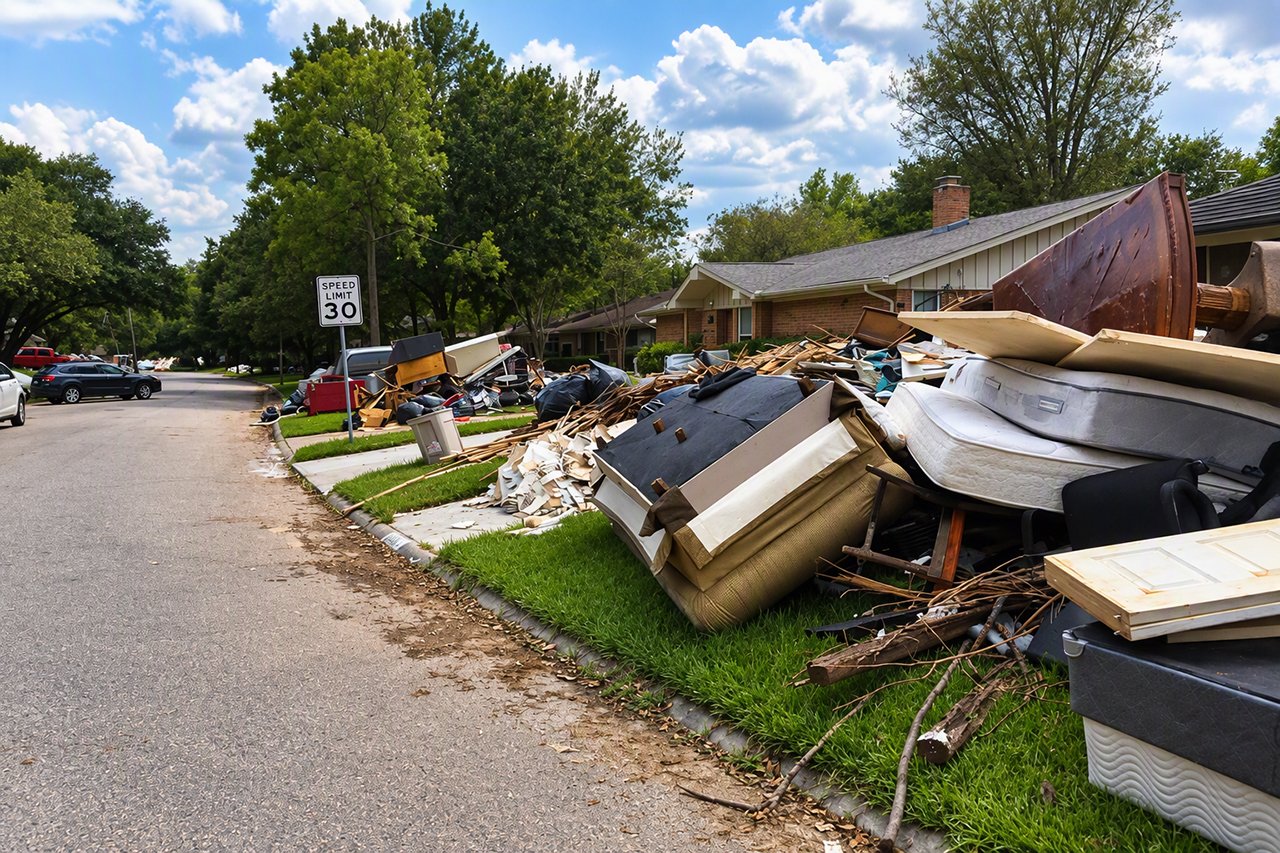
Less visible, however, is the emotional and psychological toll disasters leave behind. For community leaders, recovery means addressing both the physical damage and the needs of the people navigating it.
We asked SEH Water Stewardship Engineer Tom Ennis, SEH Water Resources Leader Brad Woznak, PE, PH, CFM, and psychologist Dr. Anne Jacobs to share their perspectives on disaster recovery. Together, their insights highlight five lessons on trauma awareness, clear communication, and resilient infrastructure that can help you support residents after a disaster.
1. See the People Behind the Data
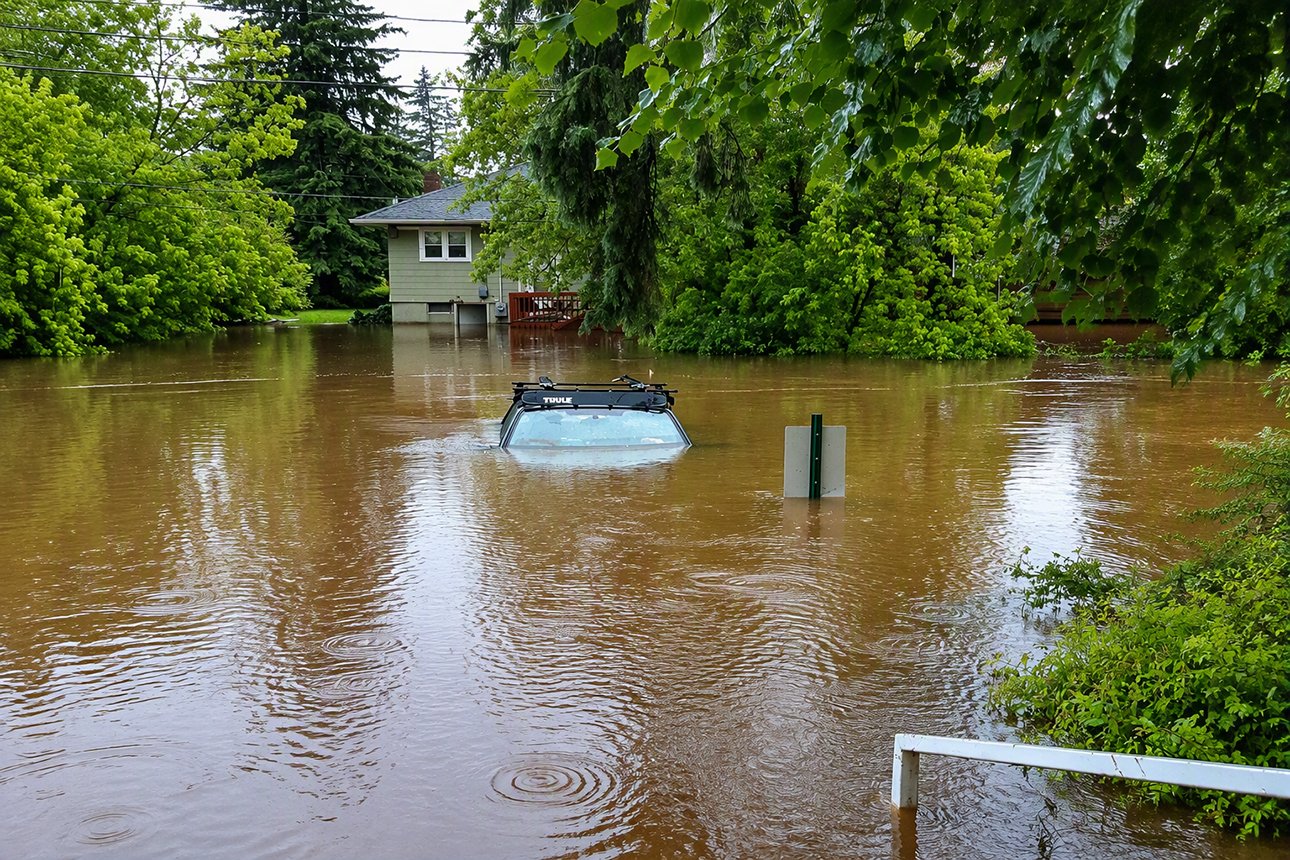
For engineers, flood maps, hydraulic models, and risk assessments are part of everyday work. Witnessing the aftermath of a flood firsthand, however, can change how those numbers are understood.
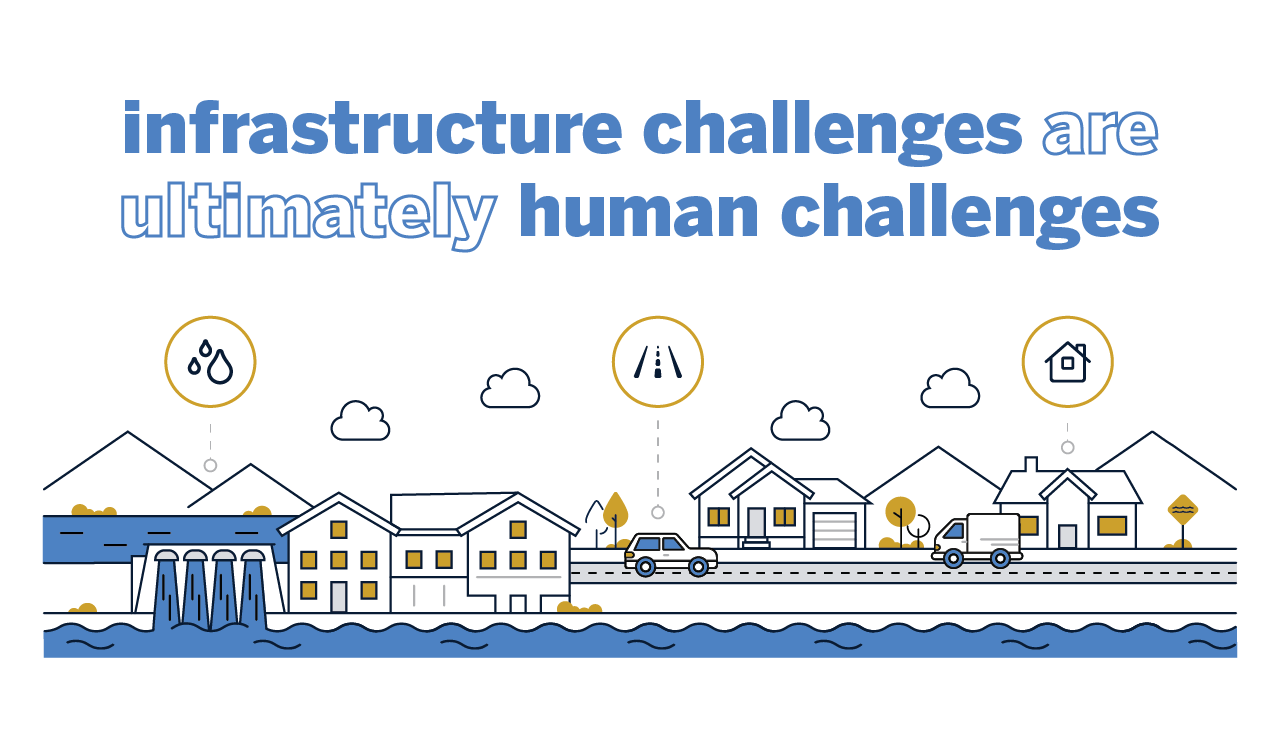
Over his career, Woznak has visited communities where streets were lined with flood-damaged belongings and neighborhoods faced weeks of uncertainty. Experiences like these underscore an important truth: infrastructure challenges are ultimately human challenges. Every elevation contour or flood prediction represents real families, homes, businesses, and lives.
Returning to communities years after mitigation projects have been completed can offer a different perspective. When residents experience another flood without the devastating losses they once faced, the value of resilient infrastructure becomes clear. A successful project may mean a family remains in its home, a business reopens sooner, or essential public services continue without prolonged disruption.
Ennis’ work with water systems, stormwater management, ecosystem restoration, and municipal infrastructure adds a broader sustainability perspective. Together, these areas show how infrastructure decisions can affect both natural systems and the communities that rely on them. Planning for those connections before a disaster can help communities reduce risk and respond more effectively when one occurs.
2. Understand Psychological First Aid
A central consideration in disaster recovery is Psychological First Aid (PFA), an evidence-informed approach designed to help people in the immediate aftermath of traumatic events.
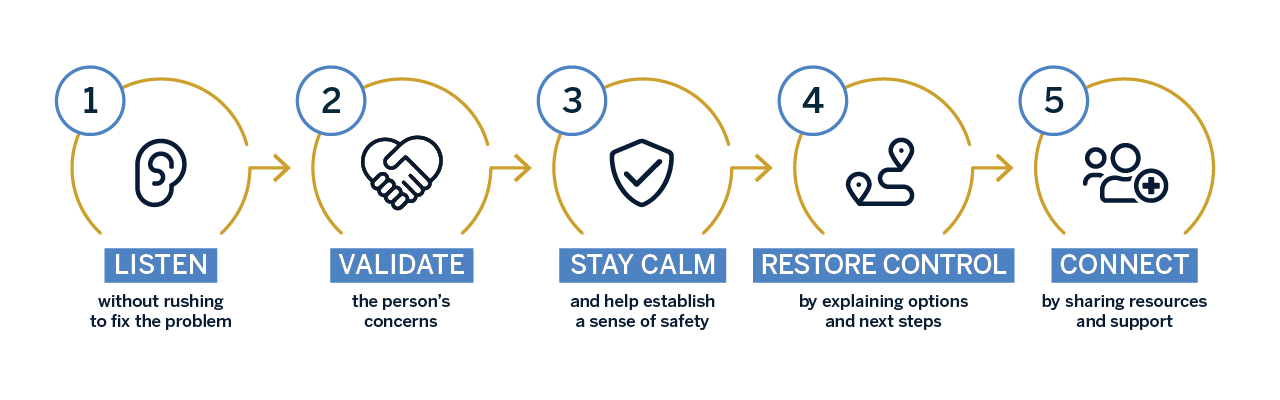
Drawing on Jacobs’ expertise in trauma and resilience, PFA offers engineers, municipal leaders, and responders a strategic framework for supporting people without asking them to act as mental health professionals. PFA is not therapy. Instead, it provides practical ways to help people feel safer, understand what is happening, connect with available resources, and address their immediate needs.
The goal is to help people navigate uncertainty and reduce the risk of longer-term difficulties. Much like early medical intervention can improve physical recovery, PFA seeks to improve outcomes by addressing needs early.
Early support also matters. When practical needs are identified and addressed sooner, community members may be better able to navigate decisions, use available resources, and take the next step in their recovery.
3. Restore Control and Predictability
Traumatic events often disrupt a person’s sense of control and predictability. Residents may not know when they can return home, whether a road will reopen, how repairs will be funded, or what another storm could bring.
For engineers and public officials, this creates an opportunity to help. While they cannot promise that everything will return to normal immediately, they can provide clarity about next steps, available resources, recovery processes, and realistic expectations. Even small pieces of reliable information can help people make sense of a difficult situation and begin moving forward.
According to Jacobs, people experiencing trauma often feel overwhelmed by uncertainty. Helping people in the community understand what happened, what to expect next, and where to find assistance can be an important step toward restoring confidence and stability.
4. Communicate Without the Technical Jargon
Engineers are trained to communicate in terms of probabilities, models, analyses, and technical solutions. During a crisis, however, community members often need clear, direct information rather than a detailed technical explanation.
Woznak has seen technical terminology increase frustration during public meetings with people already coping with flood damage. The problem is not that residents are uninterested in the analysis. They need to understand what the analysis means for their properties, their safety, and their next steps.
Research has shown that stress can reduce a person's ability to process complex information. Engineers and public officials can help by using plain language, avoiding unnecessary jargon, and focusing on a few immediate questions:
- What happened?
- What does it mean for community members?
- What should they do now?
- What will happen next?
- Where can they find reliable information or assistance?
Maps, models, and data still matter. Their purpose is to help people understand risk and make informed decisions, not to demonstrate technical complexity.
5. Support the People Doing the Work
Disasters also affect the professionals who support recovery.
Engineers, responders, municipal staff, and local leaders often hear difficult stories while managing long hours, urgent decisions, and public pressure. They may set aside their own reactions so they can focus on the work in front of them. Jacobs described responders as “sponges,” absorbing stories, emotions, and experiences from the people they serve. While that role is essential, it can also take a personal toll if those experiences are never processed.
Jacobs compares these accumulated experiences to items placed in a cabinet. A difficult interaction or memory may be put away temporarily so a professional can keep working, but the cabinet has limited space. If those experiences are never processed, the strain can build.
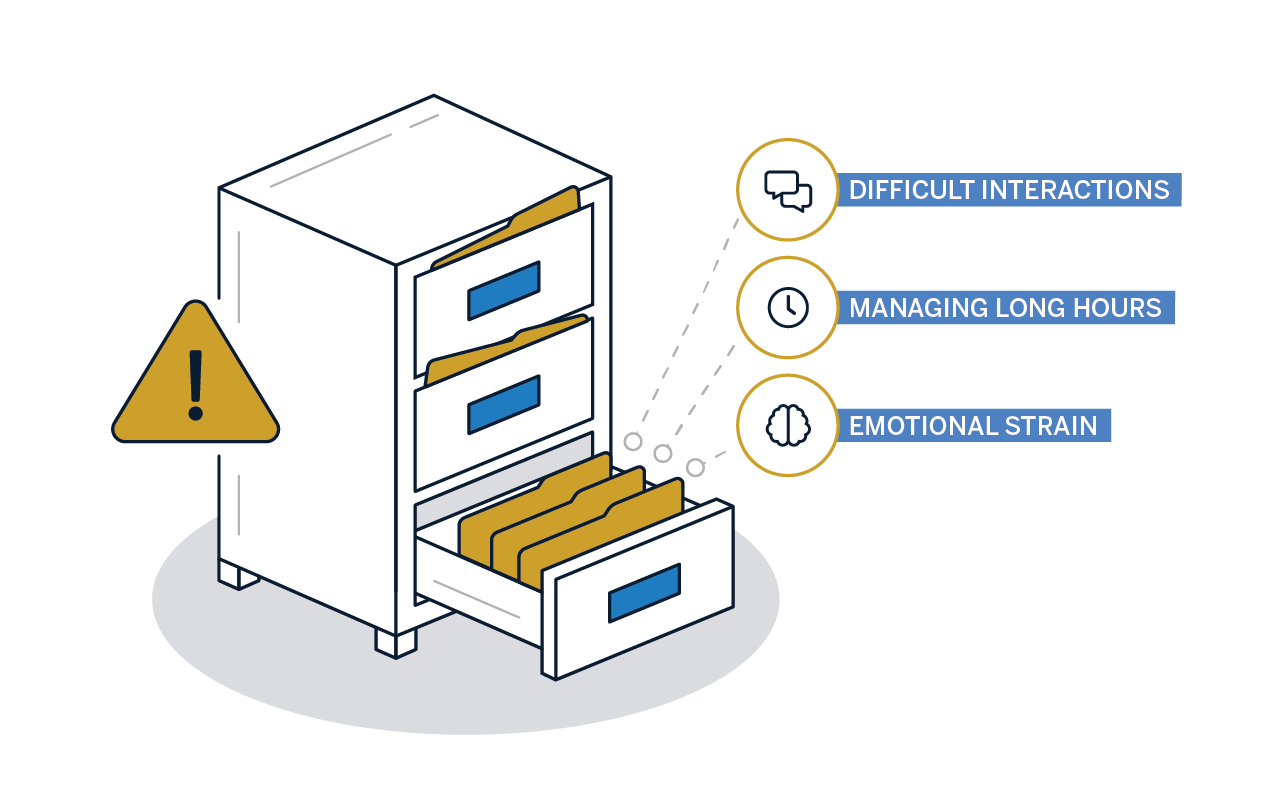
There is no single way to manage that strain. Talking with a trusted colleague, exercising, journaling, spending time outdoors, or stepping away from disaster-related work can help. The important point is to make room for recovery rather than treating stress as something professionals should simply absorb.
For Woznak, fly fishing and time outdoors provide that space. The activity creates distance from work demands and gives him time to reset. Personal practices will differ, but regularly taking time to process difficult experiences can help professionals continue serving communities without overlooking their own needs.
Organizations also have a role. Leaders can check in with employees, encourage the use of available support and recognize that disaster response may affect people long after the visible work is complete.
The Takeaway: Resilience Includes Infrastructure and People
Engineers commonly define resilience in terms of infrastructure performance. Can a system withstand a flood? How quickly can services be restored? What changes will reduce damage during the next event?
Those questions remain important, but they do not tell the full story.
A resilient community also needs members who understand the risks they face, trust the information they receive and know how to access help. It also needs public officials who can communicate under pressure and professionals prepared to support recovery while attending to their own well-being.
Engineers cannot prevent every loss or remove every uncertainty. They can design systems that reduce risk, explain what the data means, and treat residents as people navigating a difficult experience.
Recognizing both the technical and human dimensions of disaster recovery does not change the engineer’s role. It makes the work more responsive to the people the infrastructure is intended to serve.
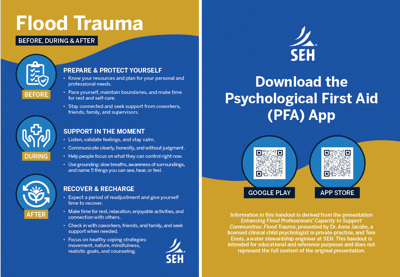
Flood Trauma: Before, During & After
Download Now
About the Experts

Tom Ennis is a Texas-based Water Stewardship Engineer at SEH, specializing in flood risk reduction, resilience planning, and community-centered water resource solutions. He works with municipalities and public agencies to help communities prepare for, respond to, and recover from flood-related challenges. As a certified Envision trainer, he provides education on the environmental, social, and economic aspects of sustainability.
Brad Woznak, PE*, PH, CFM, is a Water Resources Engineer with nearly 30 years of experience dedicated to environmentally sound, smart solutions. Brad works to advance integrated solutions for watershed health, stormwater management, and climate resilience. His work spans FEMA floodplain mapping, green infrastructure, and low-impact development strategies that protect natural systems while supporting community growth. Brad is passionate about collaborative approaches that safeguard water resources for future generations.
*Registered Professional Engineer in MN, WI, IA, NE, CO, SD, IN, TX, FL

Dr. Anne Jacobs is a licensed psychologist whose work focuses on trauma, resilience, and Psychological First Aid. Her research and professional experience have helped organizations and communities better understand the human impacts of disasters and recovery.