
.png?width=1014&height=1255&name=SEH_Logo_RGB%20(1).png)

A parcel can look perfect on paper: the right location, price, and big potential. But once the due diligence clock starts ticking, that promise is often tested quickly.
Too often, developers engage planners and engineers only after they are under contract, with inadequate time to confirm whether a site truly works. By then, project timelines are tight, leverage is limited, and surprises are no longer hypothetical – they are expensive.
Identifying a prime parcel is not about finding the cheapest land or the flashiest opportunity. It is about understanding the full cost, risk, and timeline tied to that land before committing.
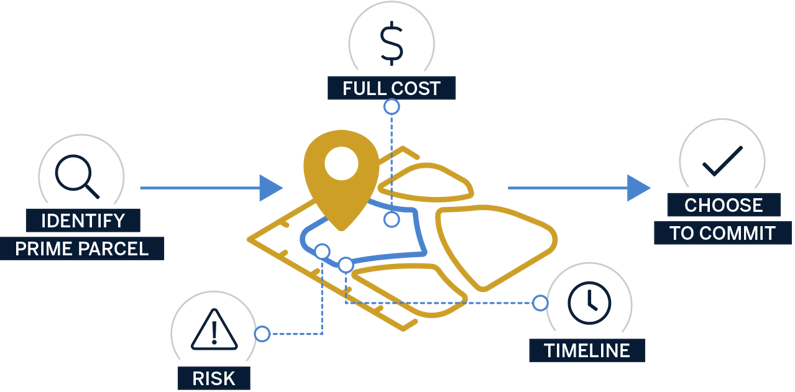
To help reduce risk and surface issues before they become costly, here is what experienced planners and engineers evaluate before calling a parcel “prime”.
The True Cost of a “Good Deal”
Purchase price is just the first line item. Development costs, approvals, and long-term operational realities are where projects succeed or unravel.
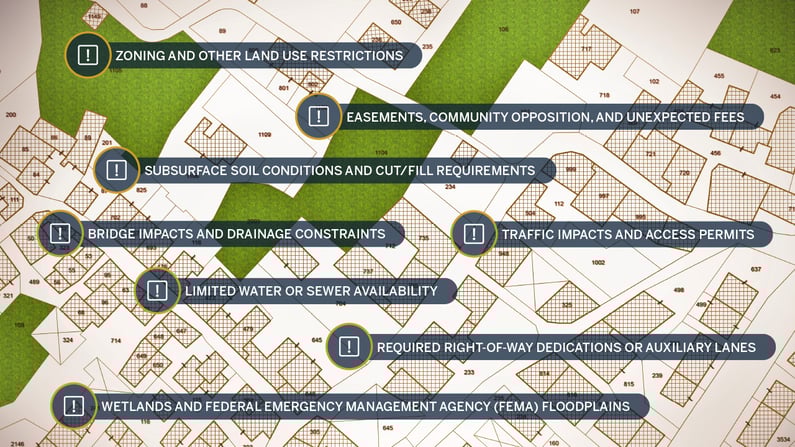
We routinely see projects challenged or derailed by issues that were not fully vetted before purchase, including:
- Traffic impacts and access permits
- Zoning and other land use restrictions
- Required right-of-way dedications or auxiliary lanes
- Bridge impacts and drainage constraints
- Wetlands and Federal Emergency Management Agency (FEMA) floodplains
- Subsurface soil conditions and cut/fill requirements
- Limited water or sewer availability
- Easements, community opposition, and unexpected fees
While many of these challenges can be solved, they require additional time and money that a better-suited or already-entitled parcel may not. That is when a “cheap” parcel becomes the most expensive option on the table.
Comparing parcels through realistic pro formas – a forward-looking financial snapshot estimating project costs, revenue, and returns – helps developers weigh risk versus reward and understand how upfront savings may translate into long-term cost.
Define the Outcome Before You Evaluate the Land
Before evaluating parcels, developers need clarity on their goals, timeline, and long-term plans. Planning approvals are a time-is-money endeavor. Absorption rates, phasing strategies, and improvement triggers all influence how efficiently a site can be developed and how cash flow is impacted along the way.

Intended use matters just as much as the physical and financial characteristics of a parcel. Residential and commercial developments have very different requirements for traffic, utilities, parking, and emergency response, and even subtle differences can create major challenges.
For example, a parcel suitable for a residential community may struggle to support a high-volume commercial project due to limited road capacity, increased utility demands, or stricter fire and safety standards. Conversely, land that works well for retail or office space might not offer the privacy, green space, or lot layout that makes residential development attractive to buyers. Recognizing how a parcel aligns with your intended use early on helps avoid costly surprises and ensures that your vision is feasible within both regulatory and practical constraints.
Prime parcels align with both the vision for the project and the schedule required to make it viable. Once the vision and schedule are clear, the next step is evaluating the land itself.
What the Site is Really Telling You
Evaluating a parcel goes beyond what you see on the surface. Physical characteristics, utilities, and regulatory realities all influence whether a site is truly viable. Addressing these issues early can save time, money, and headaches down the line.
Here are four key site factors to consider when assessing a parcel’s development potential:
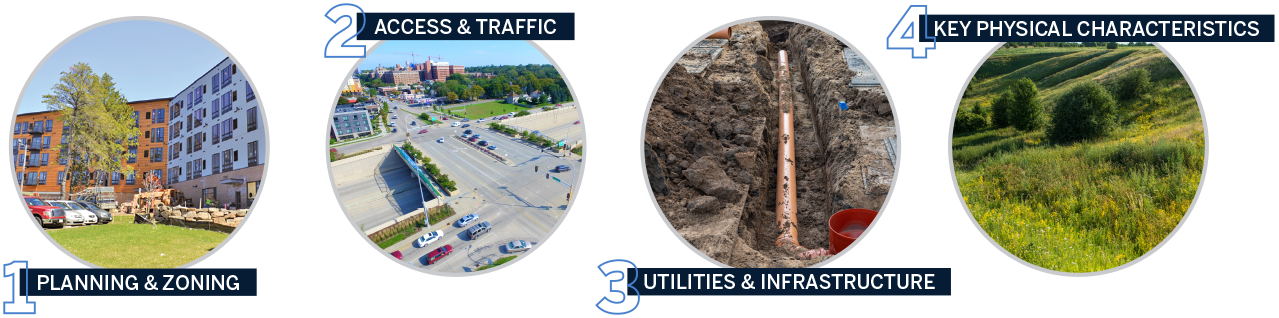
1. Planning and Zoning
Regulatory realities – zoning, land-use rules, and entitlement requirements – can make or break a project as much as the land itself. Zoning influences building height, setbacks, floor area ratios, lot coverage, design standards, and parking, among others. It can also trigger obligations such as affordable housing, park dedications, or school fees.
A parcel marketed as “entitled for 250 units” may simply be zoned for that density, and physical constraints or development standards could make that number impossible to achieve. Understanding what is legally allowed and what is physically achievable is critical before selecting a site.
2. Access and Traffic
Parcels with prominent highway access often require traffic studies, system upgrades, or coordination with state DOTs. Access limitations or permitting requirements can add time and cost if not addressed early. Civil, traffic, and highway engineers can help optimize site layouts, circulation patterns, and development density to maximize project potential while minimizing unexpected expenses.
3. Utilities and Infrastructure
Nearby utilities, water, and sewer lines do not automatically mean a site is “build-ready.” Developers must verify plant capacity, line sizing, fire flows, redundancy, and any recent code changes. Requirements such as “will serve” letters for power or water are becoming more common and can affect timelines. Overlooking these details can delay construction and increase costs significantly.
4. Physical Site Characteristics
Grades, topography, sun exposure, drainage patterns, and access points influence construction complexity, site design, and long-term usability. Steep slopes may require extra grading or retaining walls, while poor drainage can lead to costly stormwater management solutions. Ground conditions are critical – rocky terrain, unstable soils, or expansive clays can require additional foundations, retaining walls, or extensive grading. Evaluating these factors early confirms the site can support the intended development and reduces surprises during construction.
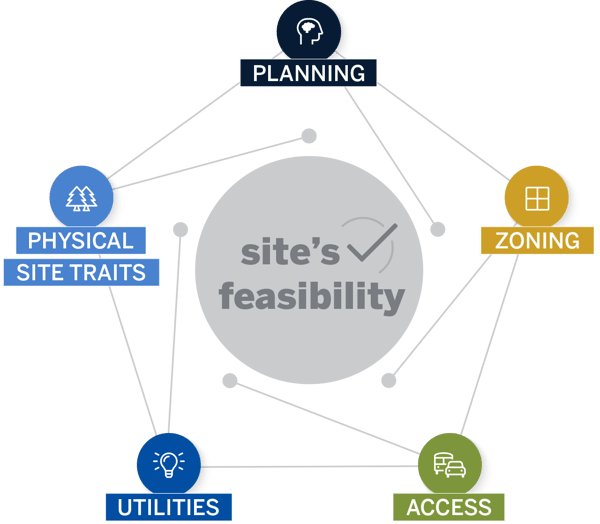
By considering planning, zoning, access, utilities, and physical site traits together, developers get a holistic understanding of a site’s feasibility. A parcel may look ideal physically, but only when these factors align – both on the land and within the local regulatory framework – can a site truly be considered prime. Even when a parcel checks all the boxes in terms of site conditions and zoning, the local municipality’s processes and priorities can dramatically influence whether a project stays on schedule and within budget.
Not All Jurisdictions Move at the Same Speed
Two parcels that look identical on paper can perform very differently depending on the municipality where they are located. Local priorities, political climate, staffing levels, and review processes all play a big role in how quickly and smoothly a project moves forward. Some jurisdictions are aggressively pro-housing, streamlining approvals to attract development. Others rely heavily on a commercial tax base, which can shift priorities, add layers of review, or slow down approvals.
Even within a single municipality, external commenting agencies – such as transportation departments, environmental regulators, or utility providers – can introduce unexpected delays or requirements. Coordinating with these agencies once a project is underway can be time-consuming and costly, particularly if approvals are unclear or input is received late.
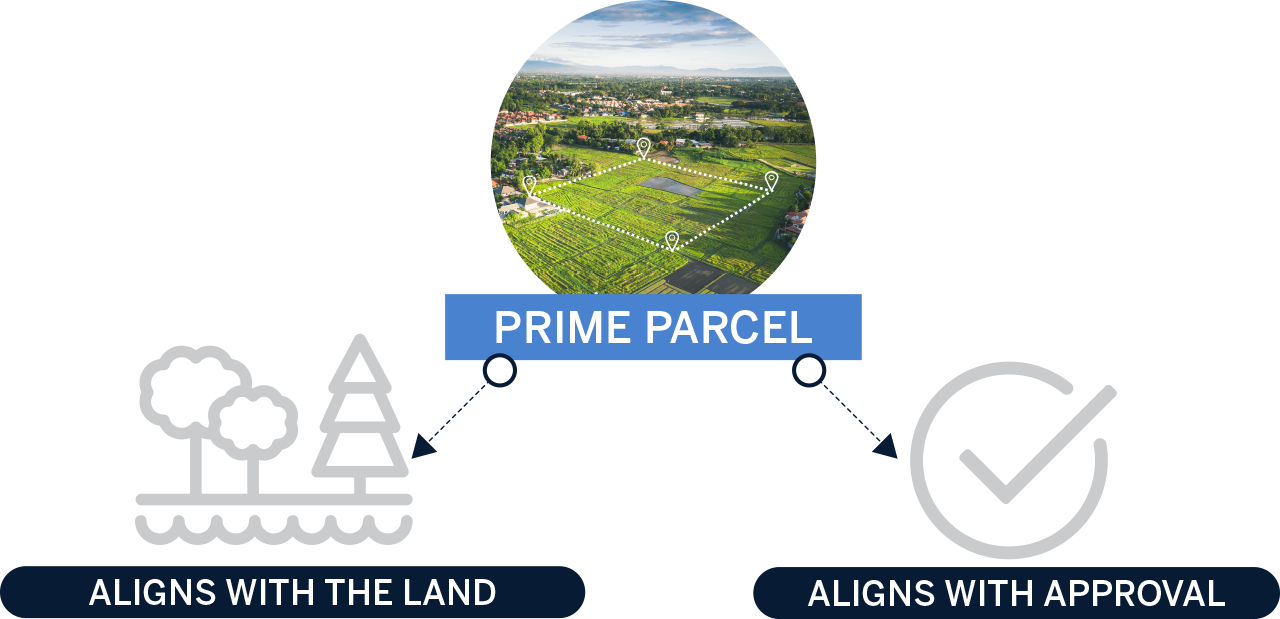
A prime parcel is one that aligns with both the land itself and the local approval process. Developers can’t control every variable, but they can reduce risk by understanding these factors early.
The Earliest Step That Reduces the Most Risk
One of the most effective early steps is also one of the simplest: talk to experienced planners and engineers.
Early discussions, feasibility studies, and cost estimates are cost-effective ways to identify fatal flaws, refine assumptions, and steer developers toward parcels that truly support their goals.
Prime parcels aren’t just found. They are vetted. And the best time to do that work is before the ink dries.
About the Experts

Nancy Dosdall AICP, LEED Green Associate, is a senior planner and project manager with experience in land use planning and entitlement. She has served as project manager on many high-profile and complex projects that included a concentrated level of public engagement. Nancy is proficient in public engagement and is an adept presenter. She specializes in finding common ground amongst stakeholders to develop community-supported plans. Her work experience includes comprehensive planning, meeting facilitation, public engagement, development agreements, annexations, and all facets of the entitlement process.
 Steve Winters, PE, is a regional leader and professional engineer with extensive experience in land development, commercial, highway, utility, and drainage design, as well as construction inspection, construction administration, project management, and site planning. He has worked on a wide variety of public and private infrastructure contracts, including rural and urban, mountainous and desert, and new and rehabilitation projects.
*Registered Professional Engineer in AZ, CO