
.png?width=1014&height=1255&name=SEH_Logo_RGB%20(1).png)
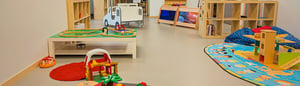
Building a licensed childcare facility is a long-term investment in children, families, and the community around you. It has a tangible impact on economic vitality. And while bright classrooms and playful spaces matter, the real effort is making sure your facility meets building codes and state licensing requirements without blowing the budget.
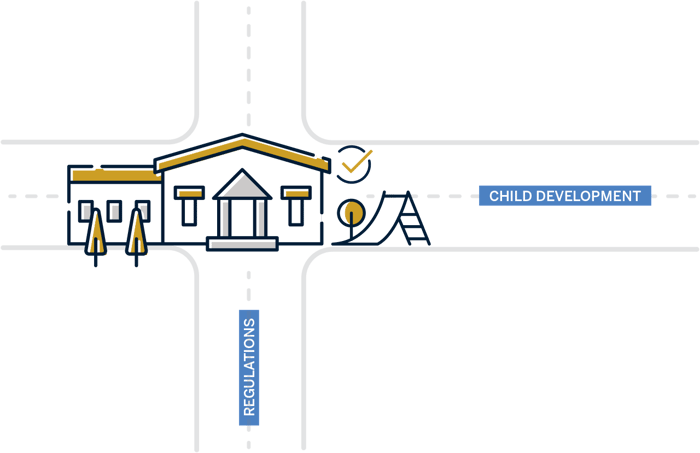
Design of childcare facilities lives at the intersection of child development and regulations to keep occupants safe. How children move, learn, and develop confidence must align with life-safety codes, accessibility standards, and licensing rules. When those pieces come together early, the result is a center that feels natural, secure, and easy to operate for staff – not one that requires costly fixes later.
Going room-by-room, we highlight key considerations to keep in mind during planning and design, whether you’re building from the ground up or renovating an existing facility. While a renovation is far less expensive than a new build, keep in mind that not all existing buildings are well-suited as a childcare facility.
Classrooms: Key Factors in Compliance and Capacity
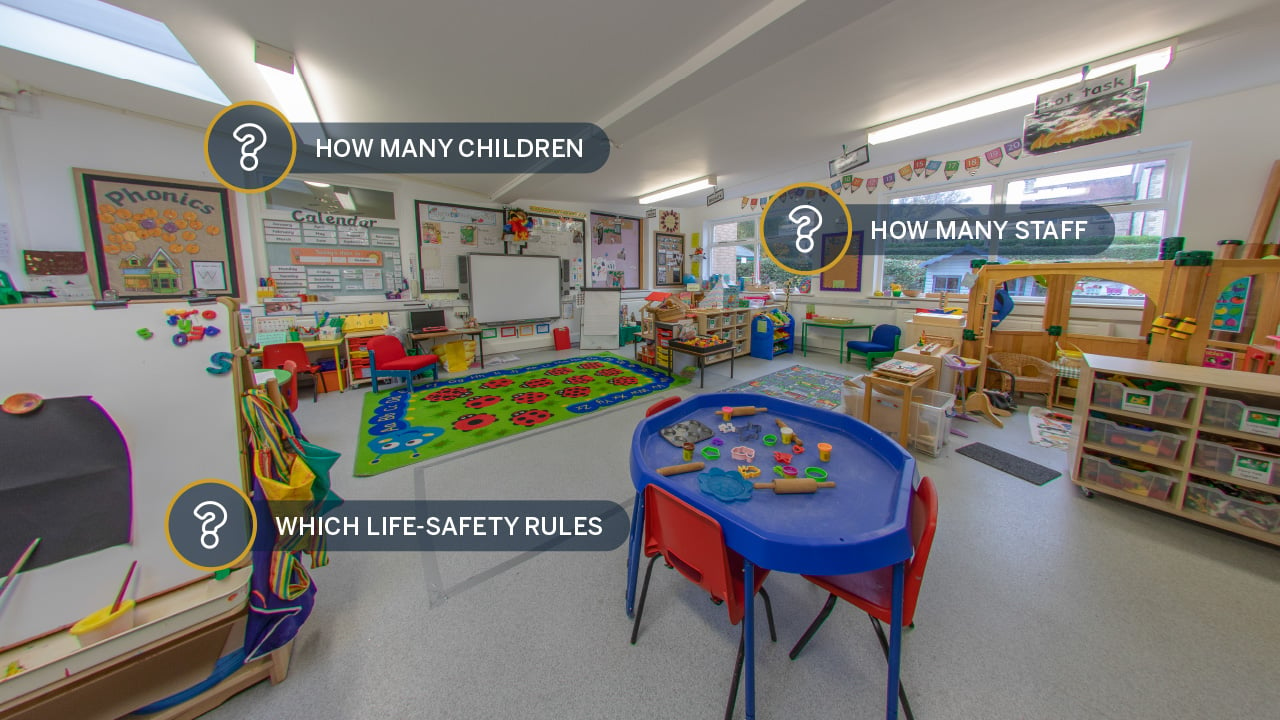
Every major decision in a childcare center starts with the classroom. These rooms determine how many children you can enroll, how many staff you need on the floor, and which life-safety rules your building must meet. Get classrooms right, and the rest of the facility falls into place. Get them wrong, and you feel it in costly staffing challenges, limited enrollment that affects income, or expensive change orders during construction.
Occupancy Classification & Use
In building code, Group I-4 is the occupancy classification typically used for daycare facilities serving young children who require supervision and assistance, particularly those under 2.5 years old. Because these children are less able to respond independently during an emergency, the code applies additional life-safety protections to these spaces.
However, some early childhood classrooms serving younger children can still qualify as Group E if certain design conditions are met. When these conditions are satisfied, the building code allows the space to be treated more like a traditional educational environment rather than a daycare occupancy.
To qualify for Group E, the following conditions generally must be met:
- The facility serves more than five but fewer than 100 children under 2.5 years old
- The classroom is located at the level of exit discharge (ground level where occupants exit the building)
- The room has a door that exits directly to the outside
Group E is typically used for childcare classrooms serving children ages 2.5 and older, where the environment functions more like a traditional school setting with more independent students. These educational spaces are most commonly single-story and located at ground level.
When children under 2.5 are served, egress doors from the classroom must connect directly to a public way to maintain the Group E classification.

Confirming early in the design process whether a classroom can qualify as Group E is critical. It allows the design team to plan appropriately and helps prevent unexpected requirements that can drive up project costs.
Student Capacity
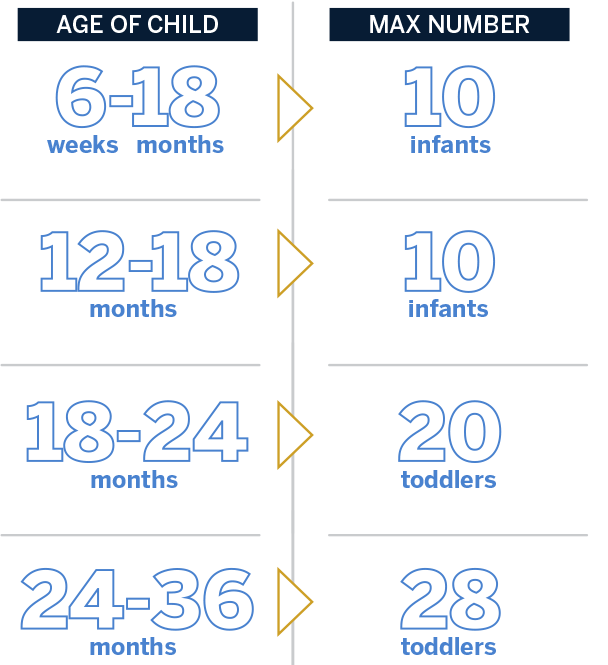
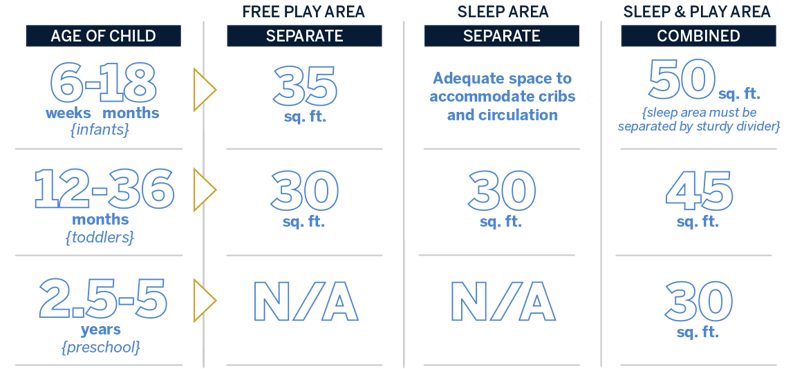
Capacity is not just about square footage and International Building Code (IBC) allowed number of occupants. Licensing authorities set maximum capacity through teacher-to-child ratios based on age groups. Childcare facilities can achieve better ratings by capping classes under the maximum allowed, essentially providing more square footage per child. Licensing then looks at the net usable area, which excludes built-in cabinets, storage cubbies, cot storage, and door swing space. Ultimately, the goal is to provide ample usable space for children to move, play, and learn.
Number of Children Allowed in One Room
Square Footage Requirement Per Child
Classroom Design Details
Small planning decisions inside the classroom, many of which are required to meet code or licensing standards, can significantly improve day-to-day operations for both staff and children.
Hand sinks
Provide a dedicated handwashing sink within the classroom. This prevents staff from having to clear and sanitize the shared kitchen sink every time children need to wash their hands.

Nap time requirements
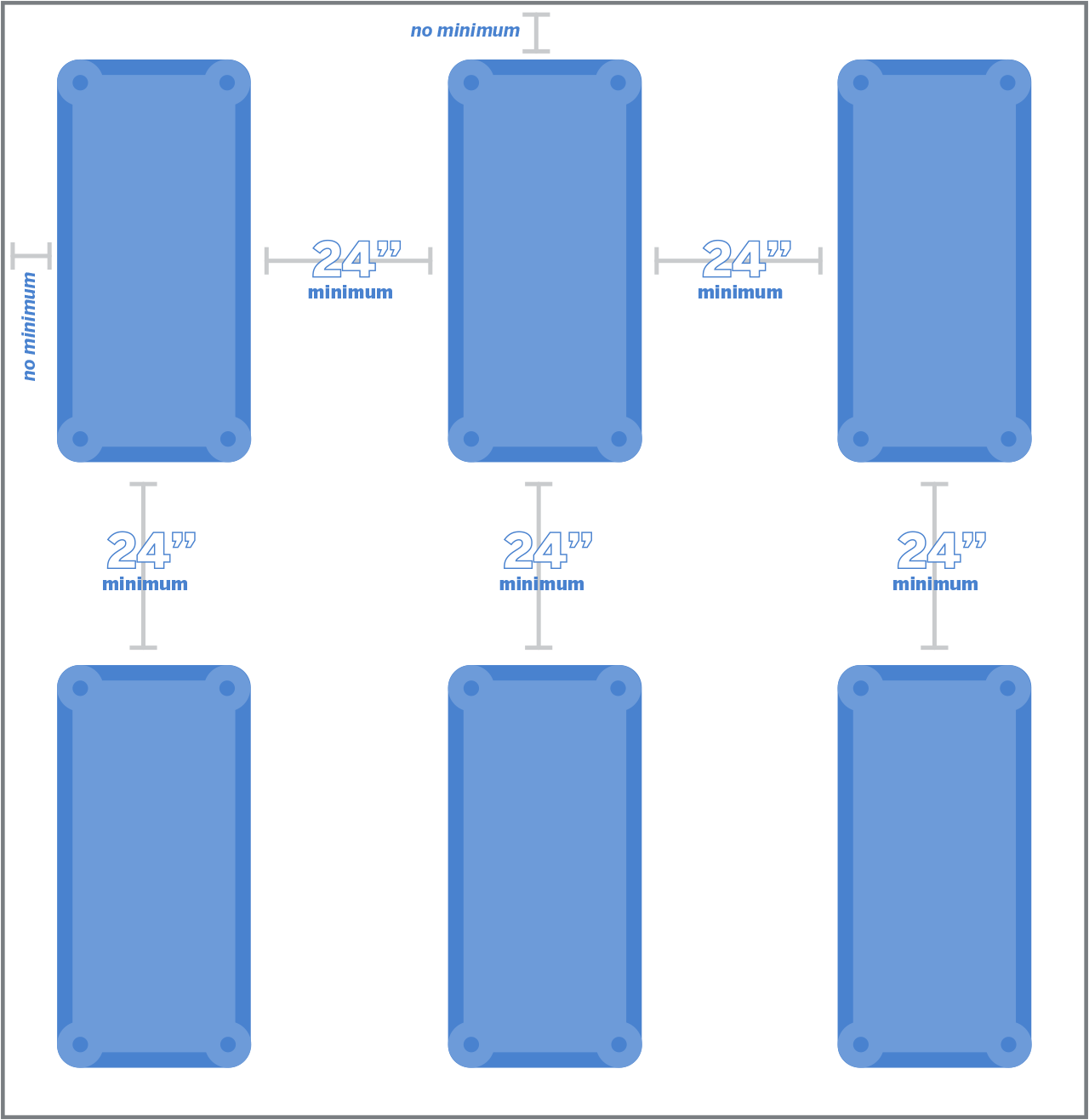
If mats or mattresses are used, the temperature at floor level must remain between 68 and 72 degrees. Sleeping cots or pads must be spaced at least 24 inches apart. Certain exceptions may apply when movable furniture dividers are placed between sleeping areas, but these arrangements must be clearly shown on the code plan.
Storage cubbies
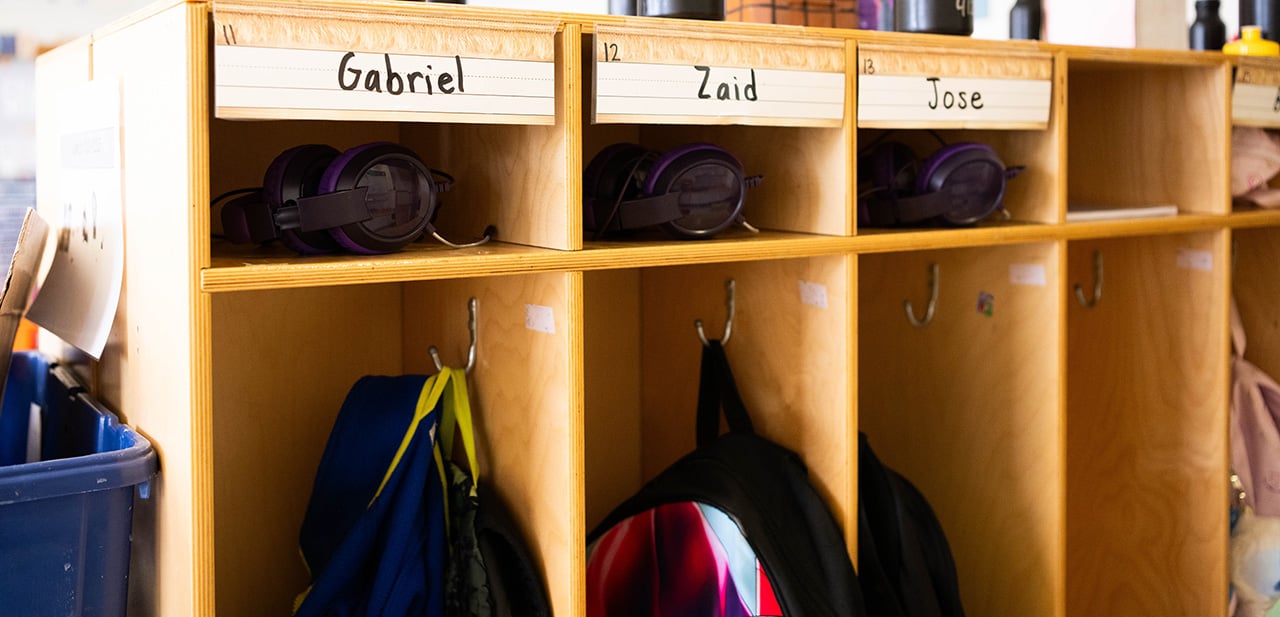
Ideally, cubbies should be located directly within the classroom so children do not need to leave the room to access personal items. When space is limited, licensing authorities will often allow cubbies to be placed in a nearby hallway. Cubbies should also include side dividers to help limit the spread of lice and other contact-related issues.
Refrigeration
Provide refrigeration sized appropriately for the age group served and the classroom’s feeding needs.
Window treatments
Use dual solar-control and blackout shades in daycare rooms to help support consistent nap and sleep routines.
Water filling stations
Install easy-to-use, plumbed countertop water filling stations with child-safety features. Systems that include UV disinfection can provide an additional layer of water quality protection.

The classroom is more than just a room. It serves as the operational anchor of the facility, influencing staffing, supervision, and how smoothly the rest of the building functions. This becomes especially important when planning nearby restrooms and support spaces.
Child Restrooms: Small Rooms with a Big Impact on Supervision
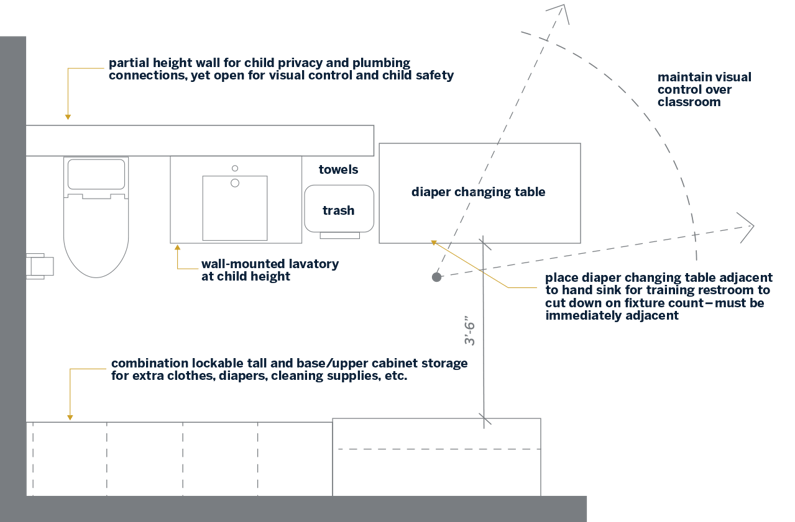
Restrooms are used constantly throughout the day, and their placement has a direct impact on how well teachers can maintain ratio compliance. When preschool classrooms have dedicated, in-room or ensuite restrooms, teachers can supervise children without leaving the classroom for every bathroom trip. This reduces hallway congestion, prevents supervision gaps, and helps the center operate as intended. If there are space and budget constraints, sometimes a jack-and-jill ensuite bathroom serving two classrooms can help meet these needs.
Clear sightlines and staff oversight are essential design requirements, too. Student toilets must be non-locking and easy for staff to monitor. Features like Dutch doors or open-entry layouts provide a balance between privacy for children and required sightlines for teachers.
Because plumbing is expensive to modify, restroom layout deserves extra attention early. For example, locating a changing table next to a hand sink supports sanitation routines and saves teachers from unnecessary steps. When restrooms function as true extensions of the classroom, teachers spend less time managing logistics and more time focused on care and learning.
Staff restrooms should be provided as completely separate facilities. In many cases, incorporating ADA/ANSI accessibility within the staff restroom is an appropriate way to meet accessibility requirements while keeping child and staff spaces clearly defined.
But staff restrooms are only one part of a much larger support system. Just as classrooms and child restrooms shape the daily experience for students, well-planned staff spaces help teachers and administrators keep the entire center running smoothly.
Staff Spaces: Behind the Scenes of the Support System
Well-thought-out staff spaces are essential to well-managed operations. Licensing typically requires dedicated staff spaces, including a break room and an office. These areas support everything from confidential conversations with families to managing enrollment, scheduling, and documentation.
To function well in practice, staff spaces should:
- Be planned early, not squeezed into leftover corners
- Sit close enough to classrooms for quick access, yet still feel separate and private
- Maintain visual control over the main entrance
A well-placed office allows directors to stay near classrooms and also have visual control over the main entrance. A comfortable break room helps teachers reset, which directly reduces burnout and turnover.
Staff areas can also serve important operational functions beyond break time. In some jurisdictions, health departments allow dishwashers located in the staff break room to be used for sanitizing toys and utensils for the entire facility. Depending on the size of the center, more than one dishwasher may be needed to handle the daily volume. When allowed, this approach can reduce the number of required sanitation fixtures elsewhere in the building, offering a more efficient and cost-effective solution.
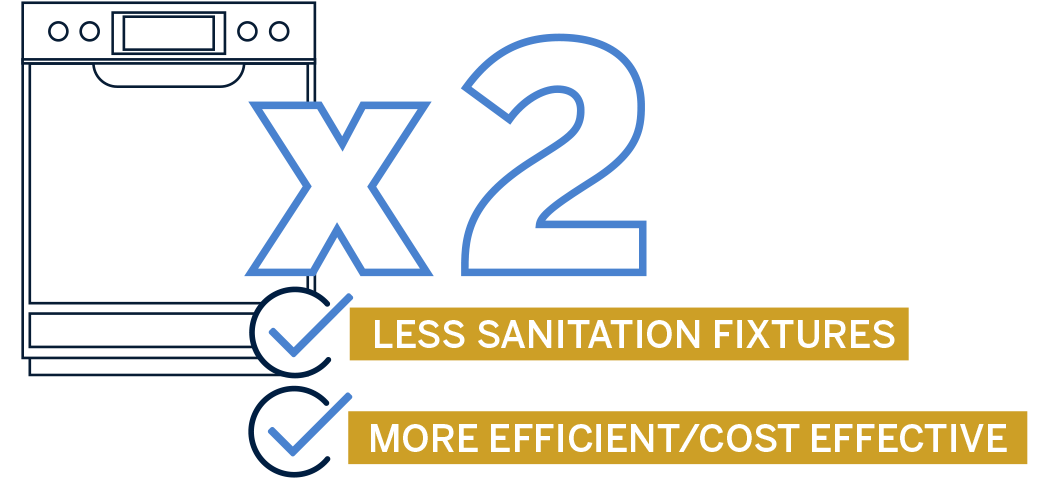
These types of operational details highlight a larger reality of childcare design: behind every classroom is a network of support spaces that keep the facility running day to day.
Laundry and Storage: Planning for the Daily Realities
Childcare centers generate far more laundry and supply storage needs than many first-time operators expect. Bedding, classroom materials, cleaning supplies, art materials, and seasonal gear all require dedicated space to keep the facility organized and compliant.
Many centers benefit from a small laundry room with a commercial-grade washer and dryer for cleaning bedding, towels, and accident-related items throughout the day. Locating laundry close to classrooms can help staff respond quickly while minimizing disruptions.
Equally important is adequate storage. Licensing often requires separate storage for cleaning products, extra classroom supplies, and bulk items like diapers and paper goods. Planning these spaces early prevents hallways and classrooms from becoming overflow storage later.
Outdoor Play Spaces: Code, Licensing, and Daily Reality
Outdoor play areas are not an optional add-on. They are a core requirement of licensed childcare facilities, and the decisions made here ripple through the entire project. Licensing typically requires a minimum of 75 square feet per child, which means outdoor space is directly tied to enrollment capacity. Lock that number in early or be prepared for tough tradeoffs later in the process.
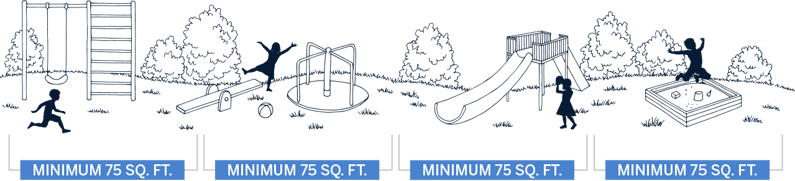
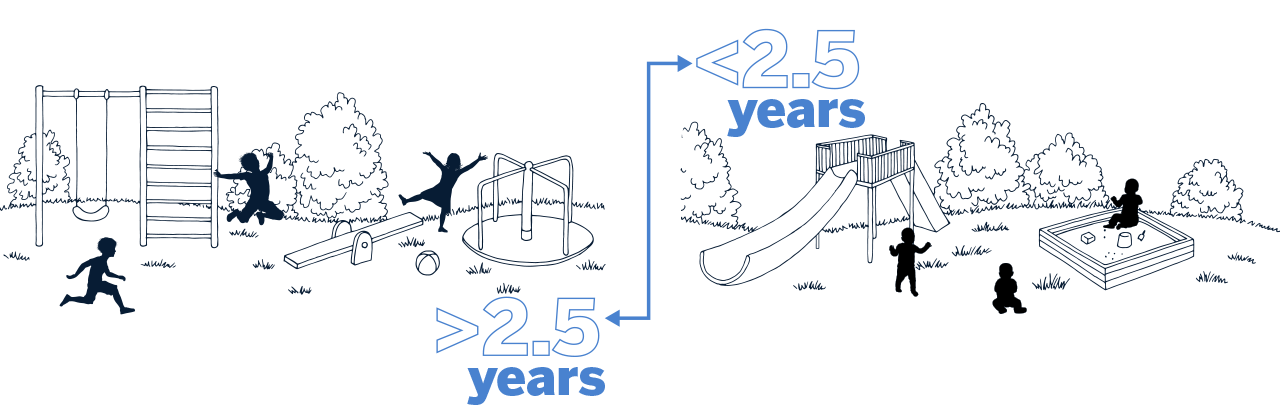
Age separation is another early, non-negotiable factor. Children ages 2.5 and younger must have a separate outdoor play area from preschool-aged children. Shared playgrounds across age groups are a common licensing pitfall, especially on tight sites. Sorting this out during site planning avoids redesigns and delays once drawings are underway.
Location matters just as much as size. Outdoor play areas work best when they sit directly adjacent to classrooms, allowing for controlled, simple transitions and clear supervision. Routes that cross parking lots or drive lanes introduce unnecessary risk and are generally discouraged. In renovation or adaptive reuse projects, limited exceptions may be possible, but they should always be confirmed with state licensing early in the process.
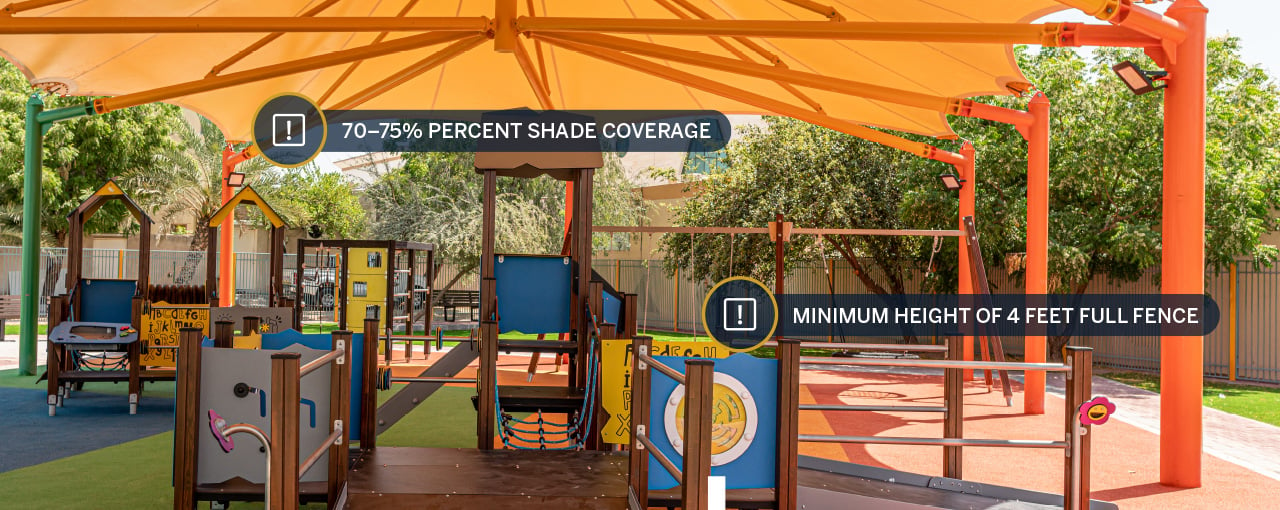
Safety and comfort round out the picture. Play areas must be fully fenced, with a minimum height of 4 feet, though a 6-foot fence often provides better security and helps deter wildlife. Shade is equally critical, with roughly 70 to 75 percent coverage recommended to protect children from heat and sun exposure. Local land use requirements and any Wildland Urban Interface or wildfire resiliency codes also come into play, influencing layout, fencing, and materials.
While outdoor play is a licensing requirement, weather does not always cooperate. If budget and facility size allow, an indoor multipurpose room can provide valuable flexibility for active play, group activities, and events when outdoor time is limited by weather. These spaces are often used for movement-based play, parent events, or large group activities that classrooms cannot easily accommodate. Even a modestly sized open room can help maintain daily routines when conditions outside make outdoor play impractical.
When outdoor play spaces are planned early and intentionally, they become a true extension of the classroom. When they are treated as leftover space, they often turn into the biggest obstacle to licensing and opening on time.
Circulation and Layout: The Pathways That Connect the Facility
And finally, it is circulation that ties all of these spaces together, shaping how the facility functions day-to-day. Clear, simple pathways make supervision easier and support emergency exits. Under the International Building Code, occupant load calculations can trigger additional exits, alarm systems, or sprinklers once certain thresholds are crossed. Tracking these numbers throughout design helps prevent costly surprises late in the process.
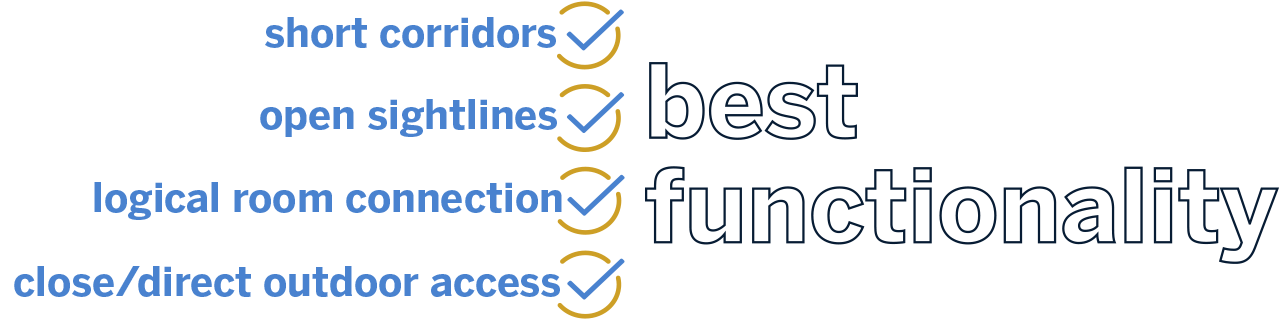
From an operational standpoint, childcare centers function best when corridors are short, sightlines are open, and rooms connect logically. Outdoor play areas should be close to classrooms with direct access that does not require navigating complex routes.
If you are adapting an existing building, the layout becomes even more critical. Single-level facilities are typically the best suited for childcare. They simplify evacuation, reduce accessibility upgrades, and support supervision. Buildings with long corridors, multiple floor levels, or poor outdoor access often require substantial reconfiguration. A quick test fit early in the process can confirm whether a building truly works for childcare before you move forward.
Designing a Center That Works in Practice
Childcare facilities are highly regulated because the stakes are high. These buildings do not just serve a function. They nurture what parents hold most dear: their children. That responsibility is not theoretical. It shows up in every decision about protection, supervision, and daily operations, and it is something we take very seriously.

When code and licensing are understood together, each room becomes part of a connected system that supports children, families, and the staff who care for them. The building stops being a checklist exercise and becomes an environment that actively supports learning, comfort, and trust.
As you move forward:
- Start with a combined review of code and licensing requirements
- Make clear decisions about capacity, age groups, and program goals
- Design each room as part of an integrated whole, not a standalone space
The goal is not just to pass inspections. It is to create a center that operates smoothly, supports staff, and gives families confidence that their children are safe, cared for, and set up to thrive. With thoughtful planning and the right partners, you can open a childcare facility that works from day one and continues to serve your community well into the future.
About the Experts

Allison Miller is a senior project architect and project manager who has experience developing plans for a variety of building types, including residential, commercial, educational, and public safety projects. She is skilled at understanding client goals while also focusing on the details to achieve the project vision. As the mom to three preschool aged children, she is tuned in to the importance of building a space and community that supports the social, emotional, cognitive, and physical learning needs of our youngest learners.

Molly Wagner is a senior landscape architect and project designer with experience in educational, medical, cultural, residential, municipal, international, and master planning projects. She is passionate about designing context-sensitive landscapes that foster a sense of community and support social, emotional, and cognitive development of young learners.