
.png?width=1014&height=1255&name=SEH_Logo_RGB%20(1).png)
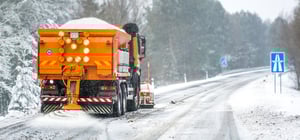
For decades, road salt has been the go-to solution for winter road safety. It works, it is familiar, and the infrastructure to store and apply it is already in place across much of the country.
At the same time, the environmental impacts of chloride buildup in soil and waterways are well documented, and communities continue to look for better ways to balance safety, sustainability, and cost.
So is the question really whether we should salt our roads at all? Not quite.
Why Salt Is Still Part of the Conversation
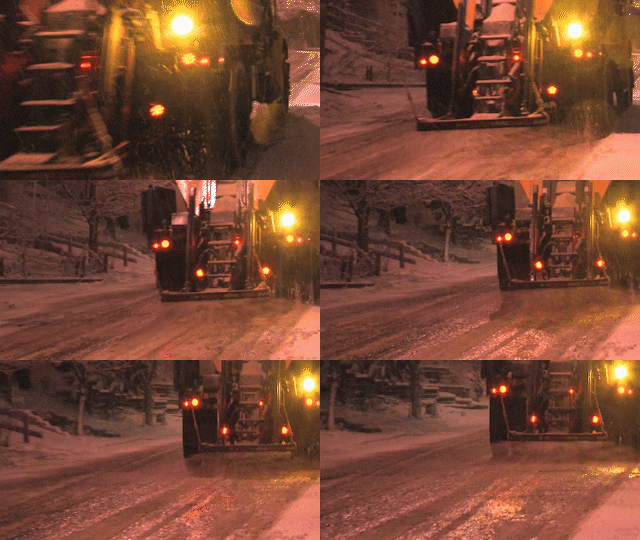
Sodium chloride remains widely used because it is effective, relatively inexpensive, and easy to source. For many agencies, especially those responsible for large roadway networks, salt continues to play a role in keeping roads safe during winter storms.
The challenge is not that salt is inherently “bad,” but that how and when it is applied matters far more than many people realize, with consequences that show up everywhere from cars and bridges to soils, waterways, and vegetation.
From Deicing to Anti-Icing
One of the biggest shifts in winter maintenance over the past decade has been the move away from reactive deicing and toward proactive anti-icing.
Deicing focuses on breaking up ice after it has already bonded to the pavement. Anti-icing, on the other hand, aims to prevent that bond from forming in the first place. Applying liquid brine ahead of a storm can significantly reduce how much salt is needed overall while still maintaining safe driving conditions.
Many agencies that have adopted anti-icing practices report lower material usage, better road conditions early in storms, and fewer environmental impacts without sacrificing safety.
What about alternatives to salt?
Organic additives like beet juice, cheese brine, and agricultural byproducts often generate interest, and in some cases they can improve performance when blended with traditional salt or brine. These products can help lower the effective freezing point and reduce bounce and scatter when applied.
That said, they are not a universal replacement. Availability, storage, odor, and cost can limit widespread adoption. For most communities, the bigger gains come from using existing materials more strategically, rather than chasing entirely new ones.
 |
Beet juiceThe briny wastewater left over after processing sugar beets can be used on roadways to dissolve ice. The sugar in the wastewater lowers the melting point of ice, making it easier to remove. Beet juice can also be combined with rock salt, helping the salt better stick to roadways. A downside is that the excess sugar in the environment can cause bacterial growth. There’s another problem. It smells. In communities where this method was tested, residents said it smelled like soy sauce. When the juice is combined with salt it produces a sticky substance that people didn’t like. |
 |
Cheese brineSome Wisconsin communities have been experimenting using cheese brine to deice roads. The brine is a byproduct created during cheese production. Like beet juice it can help salt stick to the roadway. It also has a lower freezing point than regular salt water. Polk County in western Wisconsin conducted a study and found that when using cheese brine combined with road salt, it reduced salt use by 30 to 40 percent. Typically, manufacturers have to pay to get rid of this brine. But, partnering with DOTs could be a mutually beneficial relationship. |
 |
Grass clippingsOrganic waste like grass clippings and food garbage can ferment into calcium magnesium acetate. The compound is similar to fertilizer and can be extremely effective removing ice from roads. The problem is, it is costly to properly remove enough of the acetate from the compound to make it effective. Plus, the fertilizer-like product is known to have worse environmental effects than using road salt. |
 |
Pickle brine and potato juicePickle brine and potato juice have also been used to deice roads. The two liquids act similarly to cheese brine and beet juice. |
After the organic options, the conversation naturally shifts from creative reuse to chemical alternatives. These products are purpose-built, predictable, and effective in colder conditions, which is why many agencies consider them when salt starts to fall short. The tradeoff is that their performance comes with higher costs and their own environmental and infrastructure impacts.
 |
Calcium chlorideCalcium chloride can melt snow quicker and at a lower temperature than salt, but can damage roadways, vehicles and more. Long-term winter applications also increase impact waterways due to calcium chloride entering groundwater. What’s more, calcium chloride melts snow and ice so quickly it leaves behind lots of moisture, which can then refreeze if it’s cold enough. |
 |
Potassium acetatePotassium acetate can be applied before a snow or ice event to prevent sticking to the pavement. Fewer applications are required as it continues to work longer than other pretreatment methods. The problem is it can lower oxygen levels in waterways and do damage over time. |
Although some of these alternatives are effective in deicing roads, they’re just not as economical and plentiful as salt. Calcium chloride and potassium acetate are more expensive, and there is limited infrastructure in place to support these alternative methods.
“If we think about road salt and how long we’ve been using it,” says Brad Woznak, SEH water resources leader, “there is a whole infrastructure built to support it.”
How would a new deicing agent get to communities? How would it be stored? Where would it be stored? Answering these questions would surely come with their own costs. It’s partly because of these economic factors that Woznak says more communities don’t explore alternatives to road salt.
Technology Is Changing the Equation
Modern winter maintenance increasingly relies on data. Pavement temperature sensors, weather forecasting tools, and calibrated spreader controls allow crews to apply the right material, at the right rate, at the right time.
Automated and sensor-based systems help reduce over-application, improve consistency, and support better decision-making in the field. These tools are becoming more common and more affordable, making them practical options for agencies of all sizes.
 |
Automated deicing systemsThese systems help bridge decks from becoming caked in ice. The systems use sensors about the size of a hockey puck to monitor bridge conditions. They sense if the bridge is wet or dry, pavement temperature, and if there is frost or ice on the roadway. The sensors communicate with a small weather station at one end of the bridge. If the conditions warrant, sprayers mounted within the roadway spread a liquid chemical that helps prevent freezing. A computer tells the system exactly how much of the chemical is needed, based upon the weather event happening. For example, more liquid is needed during snow, and less for frost events. |
 |
Solar-powered smart roadsAlthough more of a concept, these roadways would be made from strong glass solar panels. The panels would absorb the sun’s energy, transferring it to embedded heating elements within the road. The design is similar to how a car’s rear window has heating elements built in to melt snow and ice. Excess energy in the summer could be harnessed for other uses. |
 |
Heated roadsCirculated hot water beneath a street is one way snow-heavy cities in Japan have tackled snow melt. Instead of the roadway made of solar panels, the panels are located along the road. The energy developed by the solar panels heats water that travels through pipes beneath the roads. Cities like Vail and Aspen, Colorado, are using similar technology to heat their sidewalks and roadways to melt snow and ice away. Although very effective, this method comes with an obvious cost deterrent for most cities. Target Field Station in Minneapolis, Minnesota uses an antifreeze mixture pumped through 50 miles of tubing embedded under the walkway. The system melts snow without the use of deicing agents. |
 |
Porous pavementContrary to what one may think, this technology can also help prevent ice build-up on roadways. These pavements are not adversely affected by freezing. In cold climates, the surface remains porous, with water able to reach beneath the subbase. Still, salting is required to melt snow and ice from the surface. However, porous pavement comes with steep maintenance costs, and concrete systems have demonstrated weakening and spalling when combined with salt application. |
With all of these technological and chemical methods of clearing snow and ice, it may help to take a step back and examine how we’re using what we have.
Environmental Responsibility Without Compromising Safety
Chloride management plans, improved monitoring, and targeted application strategies are now standard best practices in many regions. These approaches recognize that roadway safety is non-negotiable while still taking steps to protect water resources, vegetation, and infrastructure.
The goal is not elimination. It is intentional use.
So, What Is the Real Question?
The real question is not whether to salt or not to salt.
It is whether communities are using the right strategy for their climate, roadway network, budget, and environmental goals.
By shifting the focus to anti-icing, smarter application methods, and data-driven decision-making, agencies can reduce overall salt use, protect natural resources, and maintain safe winter roads at the same time.
About the Expert

Brad Woznak, PE, PH, CFM, is a Water Resources Engineer with nearly 30 years of experience dedicated to environmentally sound, smart solutions. Brad works to advance integrated solutions for watershed health, stormwater management, and climate resilience. His work spans FEMA floodplain mapping, green infrastructure, and low‑impact development strategies that protect natural systems while supporting community growth. Brad is passionate about collaborative approaches that safeguard water resources for future generations.
*Registered Professional Engineer in MN, WI, IA, NE, CO, SD, IN, TX, FL