
.png?width=1014&height=1255&name=SEH_Logo_RGB%20(1).png)

{Brief}ly Speaking about what it really takes to secure funding in today’s shifting landscape. SEH’s Alex Smith and Minnesota lobbyist, Jeff Anderson, share insider perspectives on how changing programs, new priorities, and evolving regulations impact the funding process. They reveal what separates successful applications from missed opportunities, how to stack funds strategically, and what AEC professionals should be watching next to stay ahead of the game.
Episode Transcript
Mollie (Host)
Welcome to our SEH podcast, {Brief}ly Speaking. If you're new here, hi, I'm Mollie, your host. If not, then you know the drill. We keep things short, sharp, and to the point. So here we go. Today we're talking about something that shapes every AEC project from the very beginning: funding. It's always been a challenge, but now the playing field is shifting. Programs are being revised or canceled, environmental clearance rules are changing, agencies are resetting their priorities, and fiscal policy debates seem endless. What hasn't changed is that funding is still out there. The challenge is knowing how to find it and make it work for your project. Here to break it all down, we've got two guests joining us today. First we have Alex Smith, an experienced economic development leader here at SEH with a strong track record in securing funding for clients as he's helped secure millions in capital investments and created thousands of jobs nationwide. Alongside him is Jeff Anderson, our Minnesota lobbyist who knows the ins and outs of working with legislatures and government agencies. And together, they bring an insider's perspective on how communities can not just find funding, but actually win it. So Jeff, Alex, welcome to {Brief}ly Speaking.
Jeff (Guest)
Thank you. Great to be here.
Alex (Guest)
Thanks, Mollie.
Mollie (Host)
All right, we're going to start broad. How has the overall funding environment changed in the last few years, and why should AEC professionals care about those trends?
Alex (Guest)
I might start on the federal side. So there's been quite a bit of changes over the last year with the new administration, everything from executive orders, oversight shifts, the Doge initiative, grant terminations, increase in oversight and compliance, changes to social programs. At the end of the day, we're just seeing funding priority shifts. So funding, as you mentioned in the opener, still continues to be out there. It's just what and why are they funding projects. So Just with this administration at the federal level, focusing things on like domestic infrastructure, US manufacturing and energy dependence, workforce development, those are trends that we're seeing at the federal level, and sometimes those do seep down to the state level. And with that, I might segue to Jeff on some of his comments regarding Minnesota funding changes.
Jeff (Guest)
Minnesota funding changes is a lot like that old saying about the weather. If you don't like it, wait 5 or 10 minutes and it'll change. And we've seen that happen at the Minnesota legislature, where just a few years ago we had a $17 billion budget surplus. There was literally more money than I think legislators knew what to do with. Now this year and into the next several years, the state of Minnesota is facing a budget deficit. So there are some pretty wild swings in how the money is collected and spent. And then there's bonding. Not every state does this, but in Minnesota, they'll borrow money for public investment projects of regional significance and things like that. And traditionally in Minnesota, every odd year was the budget year and even years were the policy and bonding years. And that has kind of changed a bit where now it seems as though a bonding bill could happen any year. But the complexities of bonding is that you need a super majority. So you need Democrats and Republicans to work together to pass a bonding bill. And in Minnesota, we have, I think, the most evenly divided legislature in the country, a tie in the House and a one vote majority by the Democrats in the Senate. And so bonding has to be a real compromise. And they are working to do a bonding bill again this year. They did one last year. We'll see if they can come together and decide on how much they're going to borrow and who gets those projects split across the state of Minnesota. Going back to your question on how things have shifted, we've seen dramatic shifts in Minnesota, but I think as you said in the opening, there's always funding available. It's just at what level and what are those priorities?
Mollie (Host)
So from both of your answers, it sounds like really the first step in funding is identifying what your project falls under and then what your options are. Once that's done, in your experience, what separates successful applications from ones that get passed over?
Alex (Guest)
From my experience, there's always a couple rules of thumb that help you out. One is being shovel ready, which sometimes can have a great definition, but truly having design and a truly detailed cost estimate, that's helpful. federal or state programs all love being last money in. And what I mean by that is they like to know, will the project happen and can we help close a gap? It's always nice to have on a $2,000,000 project, $1,000,000 already secured. And as we mentioned earlier, every agency just has different investment priorities, whether you're going through a state economic development organization. They might be, hey, we're looking at PFAS treatment, hey, we're looking at job creation. So it's just important that you understand how your project aligns with why that agency has funding.
Jeff (Guest)
From my perspective as a lobbyist, making sure that our legislators that represent a community or a project are on board and are supportive is key. I mean, we need those folks to understand the project and to say it's going to be on their list of priorities. That's helpful, especially in the area of bonding, because the bonding bills really are a product of legislators saying, I need this. I need this for my community. It may not get all the money we're asking for. It may take several funding cycles or several years in order to be successful. If the legislators are supportive and on board, it really helps move the project forward. But then there's other areas outside of bonding that we work on here in Minnesota. There's other pots of money aside from just bonding. There's competitive programs, say through the Public Facilities Authority or through the Department of Economic Development, where we can get legislators to help weigh in with letters and support, help talk to people. and make sure we're on a list and that we're receiving fair consideration for funding. But then there's others like the Clean Water Funds or in Minnesota, the Legislative Citizens Commission on Minnesota Resources, which is money from the lottery that's dedicated to environmental projects where we have to go and talk to citizen members of boards and legislators about our projects. And so there's a lot of conversations, a lot of lobbying, a lot of inviting people to come tour stuff, see things, hear from our communities. And there's the old saying, if you're not sitting at the table, you might be on the menu. Well, in this case, to be successful as a community, you want to be seated at that table having those conversations with people. And I think the government relations folks that are on the SEH team try to connect our clients with their legislators to those and to make sure we are constantly reminding them of these projects so we can be successful and move them across the finish line.
Mollie (Host)
So it really sounds like what it boils down to is clarity of priorities and then alignment with the funding organizations. Alex, I want to go back to something that you mentioned, shovel-ready projects. What does that really mean in today's context and how can teams prepare that? If that's something that you think helps get wins, let's dive a little bit deeper into that.
Alex (Guest)
So shovel ready, as I mentioned, can be kind of a gray definition, but when it comes to funding, it's truly having a detailed cost estimate and knowing that your scope is pretty darn cemented. There's not going to be changes along the way. So having a detailed cost estimate, having your environmental reviews squared away, understanding exactly the location of your project. It could be infrastructure in the ground or it could be vertical construction, but nothing will ever probably more tee off an agency having scope changes along the way and get you on a list with them that maybe they don't want to do a project with you going forward because it was a hassle. As Jeff mentioned earlier, there's always more projects than money. So an important thing for any community to remind themselves is make the job easy for all involved. And what I mean by that is have a project that's- can go out to construction within a year or two years and be completed within two to three time frame. The second have scope changes or have amendments that does cause issues. They want to have projects completed and closed out within a reasonable time frame.
Jeff (Guest)
Shovel ready the last few years has been kind of a roller coaster with inflation and supply chain issues. And legislators that we work with I think have been pretty understanding of that. Agencies have been more understanding. But now with some of that in the rearview mirror, I think shovel ready really means that if you are successful in receiving an award, that something's going to be built and you're not going to be sitting on this money for the next four years. In Minnesota with bonding, you have four years to use the money and there's nothing worse than having to go back and say, hey, we need an extension after four years. They want those funds deployed and they want to go to a groundbreaking and a ribbon cutting as soon as possible. And unfortunately, like I said, the last few years, there's been some challenges there. I think there's also always an education with politicians, with lawmakers about how complex some of these funding formulas can be when you're trying to get funds from a number of different places, state funds, federal funds, agency funds. They don't always line up. They don't always come in at the same time. And that can cause project delays. And so having that line of communication with your legislators so that they understand the timeline and how the project's going to be moving forward is important too.
Mollie (Host)
I hear you both saying, we want to get it done fast. And if we have delays, that doesn't look great. Alex, you talk about making it as easy as possible to be selected. What are some other common mistakes you guys are seeing when communities go after funding that our listeners could work to avoid? Obviously, some of it is unavoidable. We get that things happen in the AEC industry. But are there some things that you guys are seeing that could help set people up for success as they're applying?
Alex (Guest)
Having a project priority list is obviously always helpful for communities or a capital improvement plan. Highlighting those that are of highest importance and kind of fit within a two to four time frame. Selecting one or two, you know, getting those projects on their local legislators radars, on their federal congressionals radars, or even their consulting engineer lobbyists, that would be my first recommendation and I'll let Jeff add anything as well.
Jeff (Guest)
Believe it or not, asking. I've seen some communities who have been successful in getting funding and then they go, okay, we're good. We don't want to be greedy. We don't want to ask again. for every community that does that, there's another community that's got five more requests in with the legislature or a CDS request or whatever it might be. So don't be shy. If your community continues to have needs, make sure you have an ask. Have prioritization where, yeah, we have this priority number one, priority number two, priority number three. And then make sure you're working with us to explore all of the different pots of money that are out there because there are some that some communities just aren't familiar with. And depending on where you're at in the state or what state you're in, there's opportunities that may exist that we can go after and write a grant for or try to have a direct appropriation done within the legislature. So there's lots of opportunities. Just explore those and make sure to ask.
Mollie (Host)
You just got to ask. It's that simple. I wish, right? But Jeff, you make a good point and you talked about figuring out what the different priorities for the project are and listing those off. And that kind of leads me into my next question, which is stacking funds. So that makes sense. If you have a project with multiple different facets, can we get funding for each of those? But What makes it tricky to pull off?
Jeff (Guest)
Going back to what I said earlier, I think a lot of times the timelines involved. I've worked on projects over the years where they just, they have the federal funds, the state funds, the LCCMR funds, the IRRRB funds. I'm throwing out all sorts of acronyms now, but they just haven't lined up right. And inevitably you've got to go and get an extension on some award in order to be able to advance the project. So it can be complicated, but that's why we're here to help try to navigate that to get them to line up so that you can advance a project.
Alex (Guest)
Yeah, and I like to say that stacking funds is an art not a science, as you're navigating all the acronym alphabet soup there. The biggest thing is, you know, not all communities will be able to contribute to a project, but if they can and already have, use that as kind of always your backbone. You can always get grants or potential loans to take out a portion of that money that you have locally, but it's important to have some skin in the game more than anything to back fall on if you do have a gap at the end that doesn't make your project happen.
Mollie (Host)
This whole process can often be overwhelming for communities, right? I mean, they have the project, they're trying to figure out how to make it work. What is one piece of advice that you would give to a city or county that's just starting to build a funding strategy?
Jeff (Guest)
I tell people all the time, have a good engineering firm like SEH to help. Because if you think getting the money is hard, sometimes once you get the money and have to spend it and then move the project forward, it can be even more challenging and complex. And so you really do need professionals there to help navigate that and work with the bureaucracy. And that's particularly important in small towns that might not have a big professional staff like a larger city does. And so you really do need to rely on professionals within an organization to help advance the project.
Mollie (Host)
Perfect. I think that's great advice. Alex, this one's a little more directed towards you. Obviously, Jeff, you're very Minnesota focused, but Alex, you work with clients across different states here at SEH. Are there key differences in how funding flows at the state level that listeners should be aware of?
Alex (Guest)
Yes, and we're here to help with that. So I work across seven states specifically, but SEH is a company, I think we have 16 states we operate in. So I do find myself sometimes even going beyond our states I typically work in. But, back to your question, different names of just agencies, like they're named differently at the various states. They all have some different schedules for their loan applications grant applications. At the end of the day, most of all kind of the same vision is to help, lift up communities that are in need. So a lot of funding like community development block grants that originates from federal housing and urban development. that funnels down to governor's offices and then governor's offices typically come up with programs where they want to invest in a lot of it being local or downtown community infrastructure, but they all have different deadlines. But those are nice like examples of we have experience working that across multiple states. Those are typical $500,000 grants that can make that city hall or downtown pavement improvement project or sidewalk project a reality. So here we have a team of five experts working across our states, and we're hopefully a one-stop shop for you to always reach out to and navigate some of this.
Related Service: SEH Funding Services
Mollie (Host)
As you guys have mentioned, funding is changing. I love the analogy of wait five minutes and it'll change. But looking ahead, are there any changes or new trends that you think AEC professionals should keep their eyes on?
Jeff (Guest)
We try to keep our eyes on guidelines for different grants and new grants that are emerging. Legislatures are usually always creating some new opportunities to deploy funds into communities, especially underserved communities, communities of color, different groups that have maybe traditionally been underrepresented. So we look for those things. Also, there's some things that stay consistent that we want to keep pushing on. And I say this as a former staffer to the US House of Representatives. I worked for a member of Congress when there were no earmarks, there were no CVS requests. And yet my member was still able to go knock on doors at different agencies, at different departments to try to put a thumb on the scale for their communities who were applying for FAA funds or for other transportation funds. And so no matter what state you're in, no matter what congressional district the projects in, engaging with these elected officials to advocate and to talk to their colleagues about the projects that we have and the merits of those projects is a constant. And it's something that we should continue to recommend that our cities, our projects, our communities do because that hasn't changed, and I don't think that will change. That advocacy by those elected officials continues to be of the utmost importance in moving projects forward.
Mollie (Host)
As we wrap up here, is there anything that you think that our listeners need to know from your individual perspectives about funding? It could be advice, it could be timing. What would you tell someone generally listening about funding?
Alex (Guest)
Yeah, we covered quite a few topics today. Advice that I would give, as Jeff mentioned, he's worked at the US House. I've worked at the US Senate. I've worked for governor's offices. But at the end of the day, you know, you're working for communities and it's important for communities to. have a wide net of contacts, whether it's your professional engineering firm, but get to know your state agencies, get to know your federal representatives, get to know your local legislators, get to know your congressional staff offices across your states. The more networking and more emails you can have, and when you do have a project that might need some help, you've got multiple avenues. Well, we want to be a one-stop shop. It takes a lot of people to make projects happen. So we'll help out, navigate some of this funding, but also, you know, it's a little bit of responsibility for cities to have a good rolodex. I don't think rolodex exist anymore, but if they did, and maybe a virtual one, but make sure you have that thing ready and have some good contacts.
Jeff (Guest)
And don't wait. Start having the conversations early. And as always, feel free to engage with us with questions that you might have early on about a project because we might be able to send you in the right direction or provide you with some feedback as to what things work and what doesn't necessarily work.
Mollie (Host)
everyone, that is a wrap on today's episode of {Brief}ly Speaking. A big thanks to Alex and Jeff for cutting through the noise and giving us a clearer look at how communities can actually win funding instead of just chasing it. If you found today's discussion helpful, make sure to follow the podcast so you don't miss any future episodes. And as always, thank you for listening. We'll catch you next time where we will keep it short, sharp, and to the point.
About the Expert
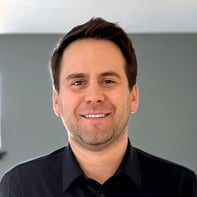
Alex Smith is the Community and Economic Development Manager at SEH. He’s a funding professional with 16 years of experience helping local governments, utilities, and public agencies secure and manage state and federal funding for infrastructure and community development projects. He leads a team of funding specialists at SEH providing funding strategy, grant and loan application development, congressional funding support, and post-award administration services.
Jeff Anderson serves as a government relations and funding strategist, helping communities navigate legislative processes and secure funding for critical infrastructure and community projects. Drawing on extensive experience working with elected officials, government agencies, and public funding programs, Jeff helps clients build partnerships, advocate for priorities, and advance projects that create lasting community impact.