
.png?width=1014&height=1255&name=SEH_Logo_RGB%20(1).png)

{Brief}ly Speaking about how communities can move from PFAS uncertainty to a practical plan forward. SEH’s Brad Weiss breaks down what utilities need to know as regulations tighten, from evaluating treatment options and managing costs to preparing for infrastructure, operational, and communication challenges. This episode explores how early planning can help communities make informed decisions and prepare for long-term compliance.

Episode Transcript
Mollie (Host)
Welcome to {Brief}ly Speaking, the SEH podcast where we break down big infrastructure topics into quick, practical conversations. Today we're diving into one of the biggest water challenges facing communities right now, PFAS. You've probably heard them called forever chemicals and for a good reason. These compounds are showing up in drinking water systems across the country, regulations are tightening, public awareness is growing, and utilities are being asked to make major decisions quickly, often with limited funding and evolving guidance. But PFAS isn't just a treatment problem. It's a planning problem, a communication problem, a funding problem, and increasingly, a long-term infrastructure challenge. Joining me today is Brad Weiss, a professional engineer who spends a lot of time helping utilities answer some of their toughest water treatment questions. Whether it's evaluating new treatment technologies, planning facility improvements, or supporting projects through construction, Brad brings a practical perspective on how communities can turn complex challenges into workable solutions. And with that, Brad, welcome to {Brief}ly Speaking.
Brad (Guest)
Hi, Mollie. Thanks for having me today.
Mollie (Host)
Let's start simple because PFAS can feel incredibly technical. What are PFAS and why have they become such a major concern for communities and their water systems?
Brad (Guest)
Yeah, you're right, Mollie, they can feel very technical. There's just so many of them. So PFAS isn't one single compound. The last report I heard was upwards of 50,000 compounds that we are using in our society. So they're a family of manmade chemicals. We use them in industrial processes and fabrication. Think products like nonstick cookware, firefighting foam, water resistant materials. They're pretty active in our daily life where we don't want one thing to stick to another thing, right? So on the chemistry side, it's a very strong carbon fluorine bond. You link these carbon and fluorine molecules and they build on each other and it's a very strong bond that doesn't naturally break down in the environment. So from a utility concern, a city concern, we're just starting to regulate these on the drinking water side because they don't break down. That means we need to remove them if they're in our drinking water.
Mollie (Host)
And you touched on this a little bit in your answer there, but I do want to go a little bit more in depth because I think it just helps build the whole background, right? So water contaminants are nothing new. We've seen those throughout our history. What makes PFAS feel different from some of these other contaminants that utilities have dealt with in the past?
Brad (Guest)
Yeah, so here in the upper Midwest, a lot of what we deal with are what we call secondary standards. They're aesthetic concerns in water. I think iron and manganese, things that are going to leave deposits on your water fixtures. We also deal with primary contaminants; arsenic, radium, things like that. Comparing the two, it feels different to me because these other compounds are naturally occurring. We kind of can say, this well's always had it, we know it's always there. It was a pretty easy test. With PFAS, there's so many of them. We're regulating a very small number of these compounds, regulating six of them. But it's fairly recently that the tests have become more so widely available that utilities can understand what's in their water on these, and we call them emerging contaminants. We're understanding their impact, understanding how we can test for them. And the thresholds that we're looking at are pretty low from a regulatory standpoint. We're in the parts per trillion level. And parts per trillion is a pretty hard concept to wrap your mind around. You talk to some people in such a low concentration, why do we care about it? And we care about it because studies have shown health impacts, right? But that low level of testing, low thresholds, the fairly recent development of these on the drinking water front, and the fact that we put them in the environment, it's all hard things to kind of wrap your head around as a society.
Mollie (Host)
Yeah, and I think, like you said, the public awareness is growing of it. The utilities themselves are trying to keep up with changing regulations and new things that are coming out. They're just so new. It does cause a lot of up and down there. Now, a lot of communities hear "forever chemicals". That's kind of the lay term for these PFAS and immediately panic, which rightfully so, it sounds scary. From your perspective, what are some of the biggest misconceptions that are surrounding PFAS?
Brad (Guest)
The biggest misconception out there is that we don't know what to do. They hear PFAS, they hear forever chemicals, they see pieces in the media. You look at the movie Dark Waters that came out a handful of years ago, you see other various reports on these. There are treatment technologies that are in place. EPA lists a series of best available technologies for treating PFAS compounds, removing PFAS compounds from your drinking water. So we understand what to do. And then as society is ramping up to tackle these problems, studies are coming along and developing new treatment technologies as well. So you're not stuck, you're not dead in the water. There is a roadmap forward. One of the big problems is funding. So we understand what to do with it. We understand how to treat it, how to remove it. The funding is a big piece of how to do this. All these treatments are fairly expensive to do on the back end of your current treatment processes already. And people already, you know, for the most part, don't really want to pay for water. You know, generally people aren't huge fans of utility bills. So adding additional treatment on there inevitably just raises the cost of your water.
Mollie (Host)
Let's talk about that. Go through some of the treatment options that are out there now, and then next we'll get into the funding aspect of that.
Brad (Guest)
Yeah. EPA generally lists three best available technologies; granular activated carbon, anion exchange, and reverse osmosis. All three of these are fairly well understood. They've been used in the industry for a very long time, either in municipal scale or at your home scale. So granular activated carbon, things like a Brita filter that you might have in your refrigerator. Think about that on a large scale. So, you have these small kind of sandish sized particles of activated carbon that you've put into a vessel. And they have a lot of little pore spaces, a lot of little pockets. And as water runs through them, they grab on to contaminants in the water. Basically anything that's in your water, they have a tendency to grab onto. Ion exchange, that's a similar technology to what's in your water softener. Only if you have hard water, we take these small kind of plastic pellets, a simplified term, but these little plastic pellets that just globs onto the PFAS, we swap ions, we take the PFAS, we swap out chloride ion. And then reverse osmosis, a lot of people have reverse osmosis filters under their sinks or reverse osmosis membrane under their sink and campers, all that kind of stuff. So you can take all these technologies and scale them up onto a municipal scale. They all have some pros and cons associated with them, cost, lifespan, operation and maintenance requirements. And then they all have a waste component with it. None of these were destroying the PFAS molecule/PFAS compounds. We are simply capturing them and moving them along, taking them out of the drinking water stream and moving them elsewhere. So you have a waste stream to deal with. That's all factored into what we recommend for each utility as they look to tackle this. Some utilities are better fitted to granular activated carbon. Some are better fitted to reverse osmosis. Some are better fitted to ion exchange. It all kind of depends on how that utility operates and what they have available to them for disposal.
Mollie (Host)
And I knew coming into this that obviously water treatment is not a one-size-fits-all. That's very clear in the industry just because of source water and what are you dealing with that's coming into the treatment center. That has to feel comforting though to utilities to know, okay, these are not abnormal treatment processes and we can tweak them if we need to bump it up or however we need to manage the PFAS levels that we're currently seeing. So there are options. Now, on the flip side of that, you mentioned before too, is the cost. These treatments can be expensive if they're not already active in the process, especially for some smaller communities. So how are utilities balancing public expectations and that fear that we talked about with the financial realities?
Brad (Guest)
Funding is huge. There was a study that came out not too long ago that just looked at the overall PFAS loading in the environment. And the study noted that the cost to clean up all the PFAS from our environment would exceed our global GDP. So that's a pretty difficult thing to wrap your head around. Now on the municipal drinking water side, we're not looking to clean up all the water, right? We're looking to clean up drinking water. So that still comes at a cost. Is it site costs? Do you need to acquire more land for these new treatment processes? Is the infrastructure cost? Is the cost of building these new treatments? You have an ongoing operation and maintenance costs, training costs, things like that. So, for the last couple of years, state revolving funds, Minnesota Drinking Water Revolving Fund, a safe drinking water loan program in Wisconsin, for the most part, states have had emerging contaminants principal forgiveness programs. So, these are a way for the state to fund infrastructure through low interest loans that they administer. So, they're federal funds that are administered by the state for infrastructure projects. So in this case, Drinking Water Evolving Fund, they've had an emerging contaminants piece, so that's a grant. It's basically free money for cities if they qualify to install treatment. And that's all dependent on a continued effort on state and federal parts to fund these types of programs. If we lose that funding, then it comes on the back of the utility customers, right? And that ultimately comes through rates. So anything that cities can do to reduce that rate burden is directly felt by their customers. So applying for these loans through the state, USDA Rural Development, Minnesota Pollution Control Agency had a fund the last couple of years that funded design for PFAS projects, new wells, you know, alternate source waters, treatment on existing source waters. So there's a lot of effort on the state side, particularly in Minnesota. Minnesota is fairly progressive on the PFAS front and how it's trying to help communities battle that. Anything we can do to fund it from a state level keeps it out of the pockets of the customers.
Mollie (Host)
There's a couple of things that you answered there that I want to hit on. So, the first one is there are constantly grants and different types of funding popping up, especially as more and more information comes out about PFAS, the regulations are changing. And that's one thing that our funding team is constantly watching and then trying to relay back to our clients to, like you said, keep it out of the pockets of the community members. The other thing that I wanted to hit on there was I'm really glad you talked about it's not just the treatment that we're looking at for cost. There are a lot of other operational challenges. The adding the land, potentially, the maintenance training, that's a huge one. there are some other challenges that come into play here and can add into that cost that I think can often be forgotten when looking at the whole picture. So we said that no two treatment plants are alike. How important is source identification and prevention in the bigger PFAS conversation?
Brad (Guest)
You can go down a whole rabbit hole here and every utility kind of takes a different approach. Some of it depends on what your intended outcome is, finding and actually determining what that source was from a, you know, say a legacy site, right? Actually determining what was the cause of it can be a pretty challenging and pretty expensive project. So in the upper Midwest, we have a lot of wells pulling groundwater, identifying how that water is moving to the ground. We can do that. We understand that. We have models. We have the knowledge to do that. But you're looking back, you know, 20, 30, 40, 50, 60 years as to when this might have been put in the ground and how it was migrated and what that source might have been. So it's kind of up to each utility to make a determination if they want to spend that time and effort identifying what that actual source was, then what is the goal there? Are you looking to legally go after a company that contaminated the groundwater? You know, Minnesota has seen a pretty high profile case. Look at the "3M plume" is kind of what it's been called. That's one example where there were huge efforts to do that, and it was determined by the courts at 3M needs to pay, but smaller utilities where they may have caused the contamination themselves. Firefighting foam, it's a really great way to fight fires. You know, it had a real strong purpose, right? But the flip side is we put these chemicals into the ground. So if communities were fighting fires and they had a training ground where firefighters practiced with these chemicals, you know, they very well may have caused that contamination themselves. And so you kind of run into this circle of how far do we go on chasing this and to what end? With the timelines that we're working with on the regulation front, currently, MCLs are enforceable in 2029. Now there's been some memos released by EPA indicating that they may change requirements or timelines may get pushed back, but nothing has been codified yet. So on this timeline of getting to 2029, these projects, they don't happen overnight. They're on the order of years. And so that's kind of the other piece. Do you have the time to track down the source when you have a fairly substantial infrastructure project just to treat your water to meet the upcoming regulations. So oftentimes the source identification goes in the background and doesn't become the real hot priority. The hot priority is just how do we meet these projects considering you have a year of design and pilot testing followed by 18 months to two years of construction. The time is now to start going to meet those 2029 deadlines.
Mollie (Host)
That makes total sense, I didn't realize there was a 2029 deadline. So, when you think of that question and the chicken and the egg type of problem that you have there, sometimes you just have to get it going and fixing it. I think my thought process behind that was can treatment alone realistically solve the long-term issue? And we don't know the answer to that. It is still changing, it is still evolving. I love some of the things that you hit on there, though. There are some areas that we know are hotspots for PFAS. Airports, like you said, areas where there's firefighting foam. So, if there's like training areas for firefighters, those kind of things are areas that if they are within the vicinity of the treatment plant, we'll say, where the water is running back to, then those could be ones to talk to and hopefully try to lower the levels while still staying on that quicker timeline like you talked about. Now for communities that just discovered PFAS in their system, what's typically the first challenge they run into? Is it treatment, testing, communication, funding, something else totally different?
Brad (Guest)
Yeah, I think right off the bat, the biggest challenge, if we look back, you know, maybe a year or so, the first challenge was, gosh, what are we going to do? Right? These samples that utilities were taking when they got the results in many cases kind of came as a shock, right? "Oh gosh, we have this. Now what are we going to do," right? So the first piece is just to kind of take a deep breath, collect yourself. Utilities aren't alone in this. There's countless other utilities that are dealing with the same exact problem. So the first step is just take a breath. Then it kind of comes back to how utilities and their local governments want to handle it. We oftentimes recommend just being open and honest with the public. Utilities didn't cause these for the most part, like the water utility is not the one that put PFAS in the groundwater or on the surface water, wherever the source water is. The utility didn't do that. So just being clear and open with customers, hey, we know this is out there. This is what we're doing. Here's what's happening on a federal front on regulations. This is how we're going to tackle it. Even if you don't know what the plan is, you understand that, hey, as it sits now in 2029, you need to treat it. In part, that's the messaging. We just discovered this, we are starting to treat it. Contacting your engineer so you guys can start that plan, whoever provides you water services, start coming up with a plan and then tackle that funding piece, tackle it early, understand what your funding timelines are, when you need to get applications in. Every state has an intent to apply type form. You go to the state and say, hey, I have this problem. This is what I'm looking to do. Here's about how much it's going to cost. Here's my timeline. It's a fairly simple form. We do it all the time. Our funding folks do it all the time. But there's timelines for those. So missing those timelines can push you back by a year. So understanding that timeline and then kind of coming up with a plan. How are you going to design it? What are you going to design around? Are you looking at alternate source water, can you blend your way out of it? If you have multiple wells and only one well is impacted, can you simply just combine a bunch of wells together and knock that concentration down? If treatment is your best option. Then looking at the different treatment options that are available, you know, granular activated carbon, ion exchange, reverse osmosis, what's best suited to you? In going through piloting, there's a bunch of kinds of piloting options. There's a full-scale pilot study, there's rapid small scale column studies. It depends on what state you're in. As to the requirements, for example, over in Wisconsin, the Wisconsin DNR requires a full pilot. So that's on the order of nine months to a year of piloting activities. That can happen concurrently with your design, but the first step is just identify that roadmap. Design is going to last, you know, six months to a year. Here's when we're going to bid. Here's our drop-dead date in 2029 that we need to back away up from. That's the roadmap you're looking to build. And once you have that plan, stick with it. Make sure customers know it. Make sure your local decision makers know it and understand it and are all on board with it.
Mollie (Host)
I think that's great advice for us to end our episode on here. Take the breath, make the roadmap plan, have the conversations, just be proactive on it now and then we'll be fine. It'll all be good by 2029. So as we heard, PFAS might be one of the most complicated water challenges communities are currently facing, but the answer isn't panic. Take the breath, like Brad said. It's about planning. Whether it's understanding regulations, evaluating treatment options, identifying funding opportunities, or communicating clearly with the public, communities that start early will be in a much stronger position moving forward. Thank you again for listening to {Brief}ly Speaking, and be sure to subscribe and share this episode with any colleagues tackling water infrastructure and compliance challenges in their own communities. Until next time, I'm Mollie Sabo, and this has been {Brief}ly Speaking.
About the Expert
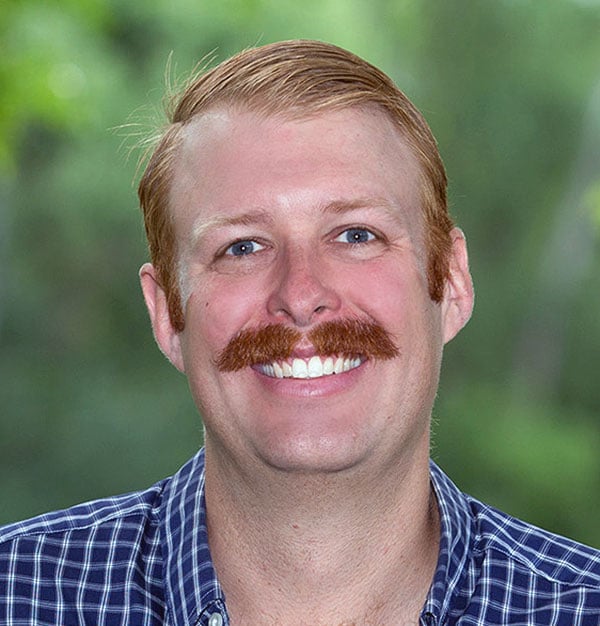
Brad Weiss, PE, is a Water Engineer with SEH who supports water treatment projects from design through construction. His experience includes cost estimating, treatment calculations, and system rehabilitation. Brad helps municipal clients improve infrastructure performance through practical, innovative solutions. In 2025, he was recognized as an SEH Associate for his leadership, dedication, and commitment to the firm's success.
*Registered professional engineer in VA, TX, IA, and CO.