
.png?width=1014&height=1255&name=SEH_Logo_RGB%20(1).png)

{Brief}ly Speaking about the next phase of lead and copper compliance. SEH civil engineer Brian Hare shares how communities can move beyond inventories and start making smart, defensible decisions about service line replacement. From setting priorities and meeting deadlines to managing public communication and long-term compliance, this episode outlines the practical steps utilities can take to protect residents and stay ahead of evolving regulations.

Episode Transcript
Mollie (Host)
Welcome to {Brief}ly Speaking, the SEH podcast that tackles big topics in architecture, engineering, and construction with quick expert insights. No fluff, just the essentials, all in a few minutes. Let's dive in. Over the last few years, communities across the country have been deep in the weeds on lead service line inventories. digging through records, verifying materials, and tracking down decades-old infrastructure details. It was time-consuming, technical, and in many cases, overdue. Now the inventory work is wrapping up, and the real questions are starting. What happens next? How do communities decide which service lines to replace first? Which deadlines actually matter? And how do utilities protect residents while keeping long-term compliance manageable? Today we're talking about what comes after the inventory, the practical steps communities need to take to move from documentation to action under the lead and copper rule. Joining me today is Brian Hare, a civil engineer who works closely with communities to plan, prioritize, and manage critical water and utility infrastructure. Brian has spent his career helping municipalities take big picture approaches to asset management, from water main replacement and groundwater treatment to long-term planning and construction oversight, all with an eye towards fiscal responsibility and regulatory compliance. So in short, Brian helps communities turn complex requirements into realistic, actionable plans. And with that, Brian, welcome to {Brief}ly Speaking.
Brian (Guest)
Thank you for having me, Mollie. It's a pleasure to be here. And most recently, we volunteered for the lead service line program manager role, and we're helping a lot of communities in the Midwest and really now across the country start up their lead service line replacement programs wherever they may sit. And part of our conversation today will probably explore what happens after that inventory is submitted. So happy to be here, happy to field some questions and take it from there.
Mollie (Host)
Perfect. Sounds like you're the perfect man to talk about this with me. So let's start with some context. Where are communities at right now in the lead and copper journey? What's been completed so far, you know, looking back a little bit here with inventories and initial assessments, and why was that first step critical to the whole process?
Brian (Guest)
So most communities completed their lead service line inventories, the initial inventory by the deadline of October 16th, 2024. And this was required under the 2021 lead and copper rule revisions, which required the identification of any lead galvanized requiring replacement or unknown service line materials. And then these inventories as part of that requirement needed to be publicly posted. The driver for this is to identify ownership and material types with the end result being the replacement of anything that is lead or galvanized. And why this matters is that the inventory is really the foundation of the entire lead service line program for a city. It determines the scale of the replacements, the replacement rate, customer notifications, and really how much funding is required per year going forward. And that's kind of an issue for a lot of cities is where does the funding come from? But with the inventories done, they now have a baseline data set to plan their strategic and equitable and fundable replacement programs. So it really serves as that basis for the program going forward.
Mollie (Host)
So that kind of leads into my next question there is that now that inventories are done, we're getting that baseline like you just mentioned. So how should communities prioritize which service lines to replace first? Is that part of that baseline process that you were discussing?
Brian (Guest)
Yeah, so it's kind of a loaded question. With the inventory requirement met by the majority of cities, the inventory can come in various levels. Some inventories are very well defined and very well researched. Cities may have records and they know exactly what to attack and when to attack it. Some inventories are very bleak, very much lacking in records, and they show maybe 80 to 90% unknowns. So those are two different buckets and two different approaches based on those cities. So going back to the first example, if they know what they have and where it is, it's a lot easier to identify the funding and the approach replacement rates and what to expect for the coming years. If they have, let's say, the 80 to 90% unknowns, They've met that requirement, but over the coming years, they have to have some sort of aggressive goal to identify the remaining unknowns so that they can adequately plan their replacement project. But really the big picture is as we update these inventories, we have to provide annual updates to whatever state agency there is where the city may be located. For Minnesota, that's the Department of Health. For Iowa, it's the Iowa DNR. Indiana, that's IDEM for all our Indiana listeners. But once that's done, we use that baseline inventory and start putting a plan together. And this is where we've, I think most recently met with about 30 to 40 clients to really understand their existing and baseline conditions. And with those two previously mentioned points, try to figure out a feasible plan to move forward to both identify the remaining unknowns and replace the knowns. If that makes sense. This base plan, I guess the lead service line plan and approach is due by November 1st of 2027. So that's another big date in the future to keep in our minds is the 2027 date. All lead service line programs have to be started by that point. And then as part of that plan, there should be some kind of language in there regarding how to reduce the number of unknowns in the system. So for a small city, it's not a big deal. You can do a lot of house visits to get this figured out. If you have 8 to 9,000 unknowns, that's going to be a much different approach. But not to get too in the weeds on that, these are all very much catered towards city needs. And we're not trying to push an SEH approach. We're trying to push lessons we've learned and cater that towards a combination approach with best practices and then what the city's existing conditions are.
Mollie (Host)
So you're really working directly with one-on-one situations with clients. If a client is listening and they're kind of sitting in that unknown range, what are some things that they could bring to the table for you if you were having a conversation to start that planning process? What are the things that they need to know or have ready?
Brian (Guest)
Well, there's a couple of things with the exploration of an unknowns. You always want to go from the most affordable approach to the least affordable approach, cheapest and most expensive, and the highest amount of information as early as possible in that process. So if a city has a lot of records, that's obviously the 1st place to go for updating the inventories. And a lot of cities are older, they may have good records, may not have good records, but there's almost always some records that exist somewhere. It's just trying to find, you know, where they may be hidden. I've spent a lot of time in city halls and back room closets looking through this stuff to find that one piece of information. So generally they do exist, but in the absence of information, you have to make some reasonable assumptions and you have to have some very good justifications for changing something from an unknown to a known. There's not a lot of language in there that says go ahead and guess. The EPA and state requirements are that you have to know that these are not lead. That's really the driver for this program. So with that record search are the first and foremost service tie cards. That's how we record where our curb boxes are and where our services are. Recent as-builts from water main projects are a good resource. Even employment records from past public works directors, they are usually a very good resource for information. So if they're still in the area or you have contact info, another great person to reach out to. But from there, there's additional things you can do from, water sampling to help narrow down areas. You can target areas based on age of homes when they were built. So if you have homes that are built pre 1930, that's probably a good neighborhood to start some of your investigations. But other considerations too are some of the prioritization strategies listed out with these requirements. So these should also be considered as part of the lead service line replacement program by a city. And these are, you know, health equity, risk and coordination based prioritization strategies. So if there are areas in your town that have elevated blood lead levels: schools, child cares, in home daycares, nursing home facilities, really the people that are at risk and should be protected should be moved up early in the program, if not the first cycle of replacements. The other one is equity based if there are disadvantaged communities, lower income communities, They, again, should be prioritized in the replacement schedule in one of the first cycles. That's required in the rule. Risk base is another one where maybe there's some sort of environmental issue, right? If you have a lot of lead leaching into the groundwater or you have acidic soils where there's a potential for interaction with the lead pipe by either getting into the groundwater or back into the drinking water, those are some issues of concern as well. And then there's a coordination based piece where as these plans move forward, you want to try to time these as best you can with an already well established capital improvement plan. So if we're going to go after this neighborhood, we want to make sure that ties well with some sort of future paving project or water main project so that it makes sense because happy residents are the best residents. These are a few things to consider when moving forward with some of these plans.
Mollie (Host)
Yeah, I mean, clearly you are well versed in all different ranges of preparedness, we'll say. And it sounds like you can really just have a conversation and help anyone on the spectrum, depending on if all the T's are crossed and the I's are dotted, or if there's a lot of those kind of unknowns, you can work with people wherever they're at to help come to a solution and figure out that prioritization. Not only that, but then the next thing of now that we know where we want to work, how does that construction sequence look to? You mentioned a deadline, which I want to hit on here. There's quite a few deadlines on the horizon. So talk to me about which are the most critical, obviously the November 2027 one, but over the next few years, and what will those milestones require from communities in practice?
Brian (Guest)
So when we meet with clients that are interested in moving forward with their lead service programs, I try to keep it limited to four key dates, two of which have passed and two are in the future yet. In between, there are a lot of little sub dates that could be of concern or should be addressed, but for today's conversation, we'll probably just stick with the high level one. So in 2021, they passed the lead and copper rule revisions, the LCRR, as the cool kids call it, and this required the inventory needed to be submitted by October 16, 2024, which we've mentioned. In 2024, they passed the lead and copper rule improvements, the LCRI, which mandated the full replacement of all lead and galvanized services within a ten year period. Typically, cities will want to shoot for about a 10% replacement rate depending on their funding. 2027 is one of those future dates we discussed where we want to be in full compliance. You want to have your lead replacement plan in place, have had those meetings, understand your inventory. and how you're going to attack that. And that plan should really include identifying the remaining unknowns and the replacement of the knowns. And then 2037 is that ultimate deadline where we're all mandated to have all lead and galvanized services to be replaced. And with that also is updated inventories every year in between there that should be submitted to the reviewing agencies. But those are probably the key ones that I share most often with clients in terms of understanding the immediate needs for those communities.
Mollie (Host)
And just having marked on your calendars. So lead can come with some negative associations, right, in terms of health. We've all heard about that. Communicating with residents about lead risks can then be tricky because of that. How can utilities do this effectively without causing unnecessary alarm? Throughout your conversations with different communities, have you heard of any best practices for public notifications or education?
Brian (Guest)
So with regard to part of your first question, we want to be very clear and actionable with our messaging. So the health effects of lead exposure are key to be included, steps residents can take to reduce exposure if they have lead lines, And then if they are concerned, they can perform sampling and get that submitted. And it also helps the city to have that reported back to the city to update their inventory as well. But in our engagement program with those cities, we will typically send out some kind of mailer if it hasn't been sent out yet to help residents either identify their own services and also educate them on that piece. But with these types of programs, there's going to be a lot of in-home inspections and coordination with residents. And with that comes the need for transparent and consistent messaging because you don't want to have one inspector say this and another inspector say this. We want it to be very, again, consistent for everybody. We want to provide as much information as possible, simple plain language descriptions, maps, tools, easy access to additional info. We use QR codes a lot. When we are in neighborhoods, we will do some door knocking to engage for targeted areas as well as use door hangers to schedule future appointments for those home site inspections. And then proactive engagements. The other piece I've highlighted here is from a city's perspective, we want to be out in front of this as far as we can. And a lot of cities, because of where we're at, there has been messaging up to this point, whether the level of engagement with residents is, it's a city-by-city case, but with this there are great opportunities to leverage already established events with cities, for example. a farmer's market or a very popular 4th of July event that's huge with the city, it might be good to set up a table and just be there to answer questions, schedule appointments, help people identify or understand how to identify their services, right? National Night Out is an underused event. That's where you have communities that come together as a community and just celebrate being community, right? And if you have city staff, Moving from area to area, it's a great way to engage. You have a group in front of you and oftentimes depending on the community, they'll just walk with you into their home and inspect it and you get your inspection done and you can get a replacement figured out in the next couple of years. So a lot of things out there that can be used to keep this program moving, but it is very much a multifaceted program. And in the end, you're replacing a lead service line. It's not overly complicated. It's just all the pieces prior to doing that is what takes a bit of time and a little planning. And there is somewhat of a strategic approach based on every city's current conditions.
Mollie (Host)
Yeah, I love those suggestions coming from somebody who lives in a 120-year-old house. I got a lovely flyer from my community trying to tell me about lead and copper. Thankfully, in my line of work, I had a heads up about this, but I love your ideas of having somebody at a farmer's market or at National Night Out events because with some of those too, you can really fine tune the neighborhoods that they're going to be in where older neighborhoods are typically going to have this problem. Then you can really be talking to those people who could have the questions and getting the right audience there. I love that idea. So again, in your talks with the different clients that you've seen or just in doing your research, what are some of the mistakes or trip ups that you've seen utilities make up to this stage? And how can they avoid them? Are there ways to balance speed of replacement with accuracy and safety? What are some things you're seeing that can help people maybe learn from others?
Brian (Guest)
I think one mistake that can come up at this stage is under investing in communication. Communication on these projects is really the crucible upon which the program rests. If you have a community that's in the dark and you know a lot of communities just don't trust cities, they're not going to want to be part of the program. And then you have what are basically nonresponders in these types of programs where we want to get the lead out and ensure public health, right? So the better communication... and it's not just a shotgun approach to throwing everything at people, it's got to be targeted towards what you know your city constituents to be, if that makes sense. So if there's more public confusion, there's going to be more mistrust, delays and eventually political pushback if there's enough mistrust in the air. So transparency, regular updates are key in those situations. Another big pitfall, and I know cities appreciate when we bring this up, is insufficient coordination with capital projects. We've talked about that a little bit earlier, but the worst thing is you have your street ripped up and then the next year someone else gets ripped up and then the year after that they do the water or vice versa. They do a street and then they come rip your road up for a service. We want to make sure to tie these together, that it makes sense financially. And it's all of our fiduciary responsibilities to make the best use of taxpayer dollars and not waste that. And I think that's got to be understood at every level that we're not here wasting money. We want to be very effective with that because it's not going to last forever. And then funding is another thing. Some cities are a little late to the game because of funding uncertainty. Minnesota is one of the states where we had a pretty robust funding package. A lot of cities don't have a state match. So because of that, there's a lot bigger burden to the city to cover these costs. So that's, I don't want to say caused inaction, but it's caused a slower upstart on lead service line programs because that was somewhat uncertain.
Mollie (Host)
Yeah, absolutely. I mean, I think those are really great lessons learned and really we're all kind of learning this together and going through this as the EPA comes out with new stipulations or deadlines or regulations. And so by having someone like you who has worked with multiple different clients that can help others maybe avoid some of these situations or be more proactive, I think that's super helpful in trying to get the best product for their communities. So Brian, if somebody is listening today and is like, I should call him, I need some help with my lead and copper, what's the best way for them to get a hold of you?
Brian (Guest)
You can reach out to my e-mail at bhare@sehinc.com, like the rabbit, and I'll be able to respond right away. So feel free to shoot me a message. And you know, part of our upfront meetings with clients are that we will meet with you, understand where you're at in your program and bring along a funding expert as well to kind of talk through funding as it relates to your state and we try to get all that information. ready to go prior to initiating a conversation with a client just so we can make best use of everybody's time. But LinkedIn, you could use my e-mail or if we can attach my fancy business card QR code to the LinkedIn link. Any of those would be sufficient to reach out with questions.
Mollie (Host)
Perfect. All right. I really do appreciate you walking us through this. I mean, you keep saying it's simple. It's just an inventory, but it can feel complicated. It can feel overwhelming when you're a small town just trying to figure out how you meet these regulations, especially now that communities are moving forward from inventory into action. I just appreciate you walking us through this and starting those conversations. To our listeners, thank you so much for listening to {Brief}ly Speaking. We will be back with more conversations to help communities navigate the challenges and opportunities shaping today's infrastructure. Thank you.
About the Expert
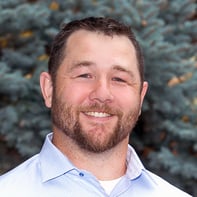
Brian Hare, P.E., serves as SEH's Lead Service Line Replacement (LSLR) Program Manager, leading multi-state initiatives focused on removing lead service lines and improving drinking water infrastructure. He partners with municipalities, utilities, state agencies, and project teams to guide communities through every phase of program delivery, including planning, funding strategy, regulatory compliance, design, construction administration, and public engagement. Brian is passionate about helping communities develop practical, cost-effective pathways to becoming lead-free.
*Registered Professional Engineer in IA.