
.png?width=1014&height=1255&name=SEH_Logo_RGB%20(1).png)
Challenge
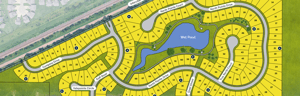
The developer behind ValePointe set out to create a neighborhood in Valley Center, Kansas, that would be attractive to future homeowners while remaining practical to build, maintain, and grow over time. The vision was straightforward: turn a 60-acre parcel into a well-connected single-family community that balanced livability, long-term value, and efficient infrastructure investment. The site itself, however, didn’t make that easy.
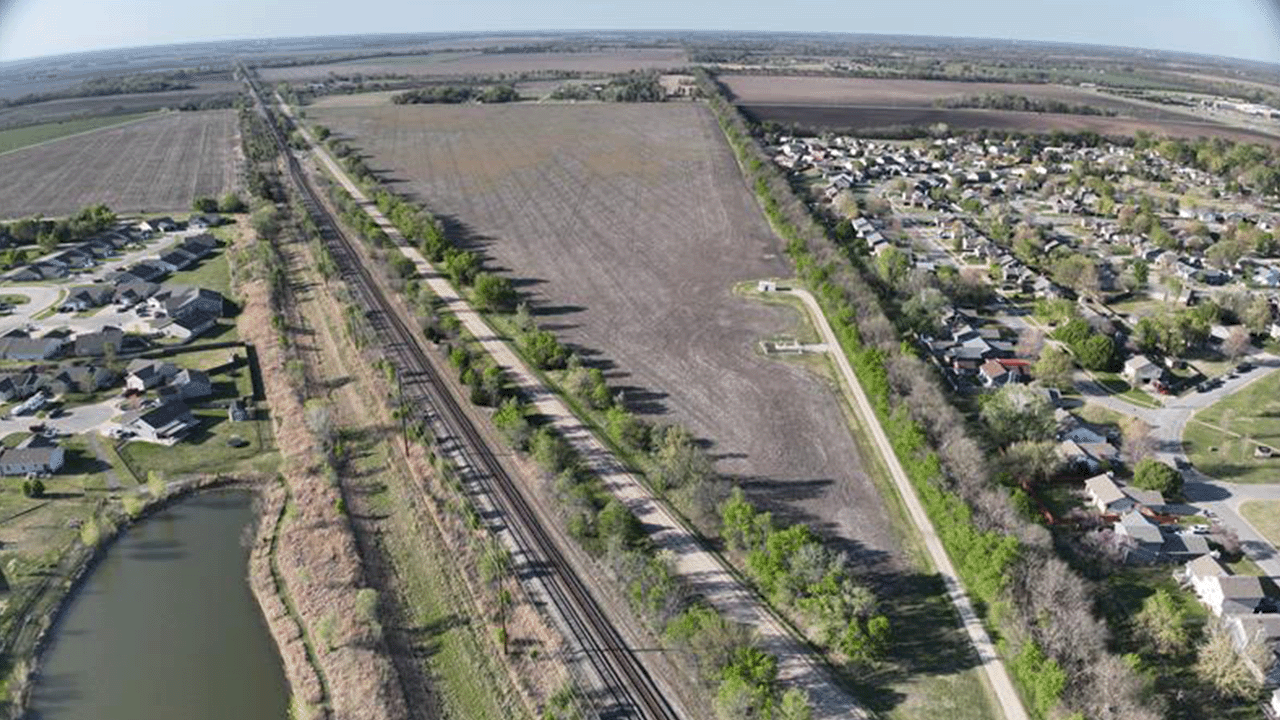
Its mostly flat terrain offered little natural drainage, the irregular V-shaped layout limited design flexibility, and nearby infrastructure required careful coordination to avoid costly complications. Left unaddressed, these conditions could have increased construction costs, slowed development, and created ongoing maintenance challenges for both the developer and future residents.
A traditional approach would have relied on importing large amounts of fill or oversizing stormwater infrastructure. That solution would have solved the technical problem, but not the client’s bigger goal of creating a distinctive, marketable neighborhood while keeping costs and risks under control. The project needed a smarter approach, one that made infrastructure work harder for the development instead of simply meeting minimum requirements.
Solution
From the start, the client prioritized a planning approach that connected engineering decisions directly to long-term development success. SEH supported the team by helping translate that vision into a practical site design that balanced density, infrastructure efficiency, and neighborhood character.
The subdivision was planned at approximately three lots per acre, creating an efficient layout that supports single-family living while maximizing land value. Early coordination helped reduce redesign risks and supported a smoother transition from planning into construction, helping keep the project moving forward on schedule.
Stormwater and Grading Approach
One of the most impactful decisions was to rethink stormwater management as more than a requirement. Instead, it became a tool to improve the entire site.
Because the property lacked natural elevation changes, the project introduced a wet pond designed not only to manage runoff but also to generate material for reshaping the land itself. Soil excavated to create the pond was reused across the site to introduce gentle topography where none previously existed.
This single strategy delivered multiple benefits the client cared about most:
-
Better drainage performance across a flat site
-
Reduced hauling and construction costs
-
Faster grading and improved development efficiency
-
Lower environmental impact by reusing on-site materials
Visually Interesting and Marketable Neighborhood
The wet pond ultimately became dual-purpose infrastructure. It manages stormwater and improves water quality while also serving as a neighborhood focal point, supporting future walking paths, landscaped open space, and recreational amenities. What could have been hidden infrastructure instead became a central part of the community experience.
Subdivision Layout and Infrastructure
The client also wanted a neighborhood that felt connected and easy to navigate despite the site’s unusual shape and its proximity to an active railroad corridor. Streets were carefully aligned to tie into existing roadways at challenging angles while maintaining safe and intuitive circulation.
SEH provided engineering support to help refine roadway layouts, lot configurations, and utility planning so each element worked together efficiently. Existing adjacent utilities were incorporated wherever possible, helping reduce installation costs and accelerate development readiness while minimizing disruption to surrounding systems.
Preservation and Long-Term Value
Preserving natural features remained an important priority throughout design. Existing tree lines along the east and west edges of the property were maintained, creating natural buffers that enhance privacy, reinforce neighborhood character, and reduce future maintenance needs.
Many of the project’s sustainability benefits grew naturally from these decisions, including:
-
Reusing on-site materials to reduce hauling and emissions
-
Integrated stormwater systems that support improved water quality
-
Preservation of existing vegetation and site character
-
Infrastructure designed for long-term durability and maintenance efficiency
By aligning engineering decisions with development goals, the ValePointe project turned a technically challenging property into a resilient and marketable residential community. The result supports faster development, controlled costs, and infrastructure designed to perform for decades, helping position the neighborhood for continued growth alongside Valley Center.
Project
ValePointe Subdivision Development
Location
Valley Center, Kansas
Client
4Front, LLC
Features
- 60-acre residential subdivision
-
Integrated wet pond system
-
On-site soil reuse strategy
-
Utility coordination with adjacent development
-
Tree line preservation
Services
-
Site grading
-
Platting
-
Permitting