
.png?width=1014&height=1255&name=SEH_Logo_RGB%20(1).png)
Every community wants streets that feel safe, connected, and easy to navigate. But deciding where to put pedestrian crossings – and why – can get tricky fast.
Without clear guidance, those decisions can feel reactive: one neighborhood requests a crosswalk near a park, another raises concerns about speeding near a school. Now, staff are left weighing competing priorities without a common framework.
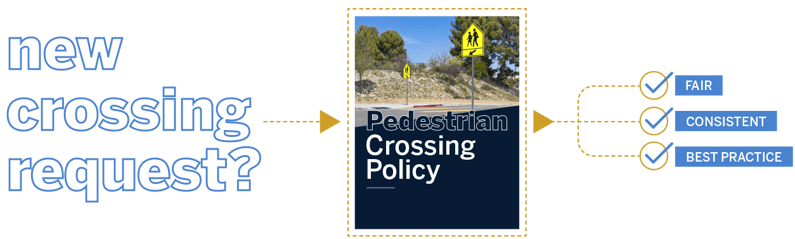
That’s where a Pedestrian Crossing Policy steps in. A solid policy takes the guesswork out of the process. It defines when, where, and how crossings should be installed, creating safer routes, consistent expectations for drivers and pedestrians, and a data-driven process. Every decision stops being a one-off debate and starts being part of a system that’s fair, consistent, and rooted in best practices.
Why a Policy Matters
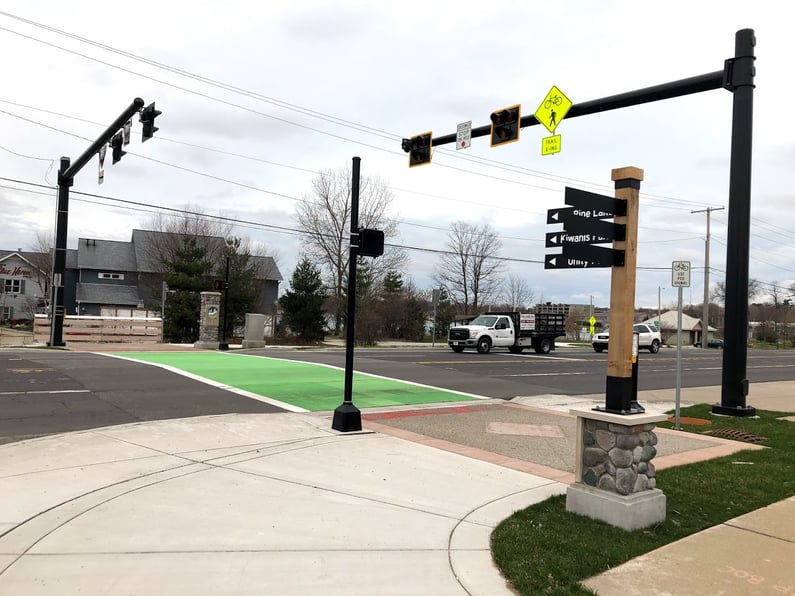
The benefits of such a policy go far beyond consistent decision-making. When crossings are designed using clear, repeatable standards, communities build safer walking networks that reduce risk for both pedestrians and drivers. Consistent elements – like uniform signage, pavement markings, lighting, flashing beacons, and placement – help everyone know what to expect, improving both safety and traffic flow.
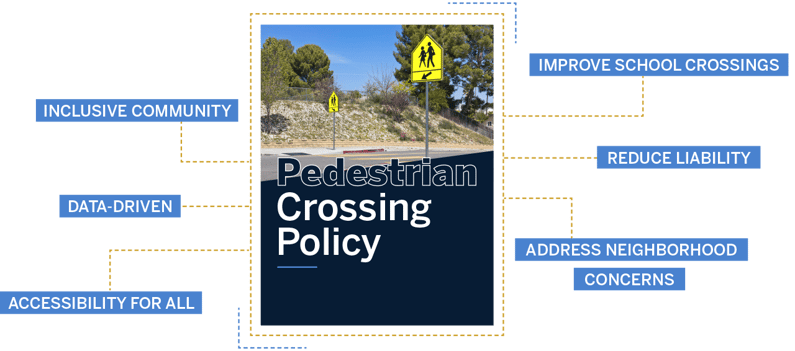
At the same time, a standard approach equips communities with a clear, reliable, and defensible framework for making informed decisions. It helps reduce liability and gives leaders confidence that data and industry standards back every action (and every dollar).
When communities implement a concrete policy, it also helps build a stronger and more inclusive community. It enables children to walk safely to school, ensures people of all ages and abilities can access parks, transit stops, and trails with confidence and comfort, and gives neighborhoods – especially those historically underserved – trust that their concerns are being heard and addressed.
But for a policy to be truly effective, it needs to go beyond good intentions and must clearly define what “safe and consistent” means in practice. This includes establishing specific criteria for evaluating, prioritizing, designing, and implementing crossings. Ultimately, providing engineers, planners, and decision-makers with a shared playbook to work from.
Defining the Details
A thoughtful policy does more than advise staff what to install; it explains why certain crossings are chosen and how they contribute to safety, accessibility, and community trust. The following examples highlight the main types and locations of pedestrian crossings and how each one supports a safe and efficient transportation network:
Types
- Controlled crossings are located where traffic control (e.g., traffic signal or STOP sign) is present. These are common at busy intersections or locations with visibility concerns or high pedestrian demand, ensuring safe, predictable movement for everyone.
- Uncontrolled crossings are when a walking facility intersects a roadway at a location (marked or unmarked) without traffic control. Generally, these work well on streets where vehicle volumes and speeds are low, pedestrian traffic is manageable, and the roadway has fewer travel lanes to support a balance between safety and traffic flow.
Locations
- Midblock crossings are located between intersections, often near schools, trail crossings, parks, or other areas with concentrated pedestrian activity or safety concerns. Strategically placed midblock crossings can make key destinations more accessible and help reduce out-of-direction travel by concentrating pedestrian crossings at one location, helping motorists anticipate pedestrian crossings and allowing pedestrians to cross safely without walking long distances to the nearest intersection or controlled crossing.
- Intersection crossings occur where streets meet and are expected by drivers. These locations are typically designed for maximum visibility to help pedestrians navigate more complex traffic patterns safely. Legally, any intersection with connecting sidewalks or trails on both sides is considered a sidewalk – even if it’s unmarked – reinforcing the importance of safe designs at these locations.
Note: Communities should verify how their jurisdiction defines these terms, since legal definitions can vary.
Building a Policy That Works
With a clear understanding of the types of crossings and the reasoning behind each, communities can move from theory to practice by building a policy that puts these standards into action.
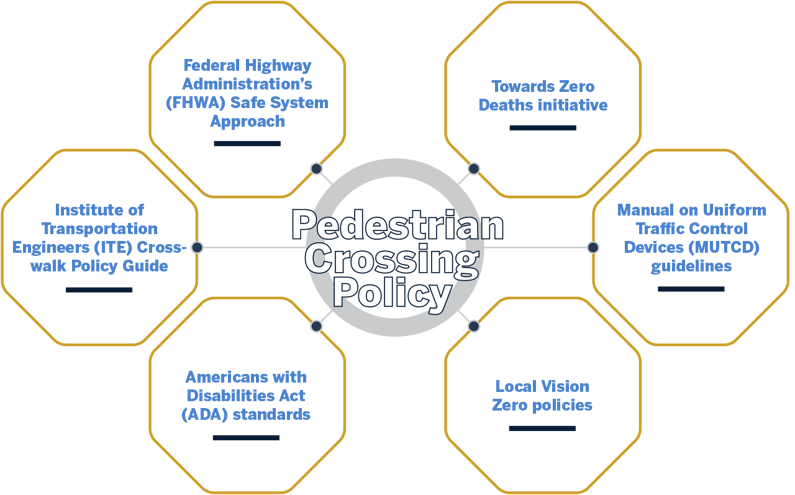
An effective Pedestrian Crossing Policy doesn’t have to start from scratch. It often builds on proven local and national frameworks – like the Federal Highway Administration’s (FHWA) Safe System Approach, the Towards Zero Deaths initiative, Manual on Uniform Traffic Control Devices (MUTCD) guidelines, local Vision Zero policies, Americans with Disabilities Act (ADA) standards, and the Institute of Transportation Engineers (ITE) Crosswalk Policy Guide, which SEH’s Heather Kienitz co-authored – while adapting them to local needs. Further, national and local laws may also address crosswalk and pedestrian crossing legal definitions which also must be considered in a crosswalk policy.
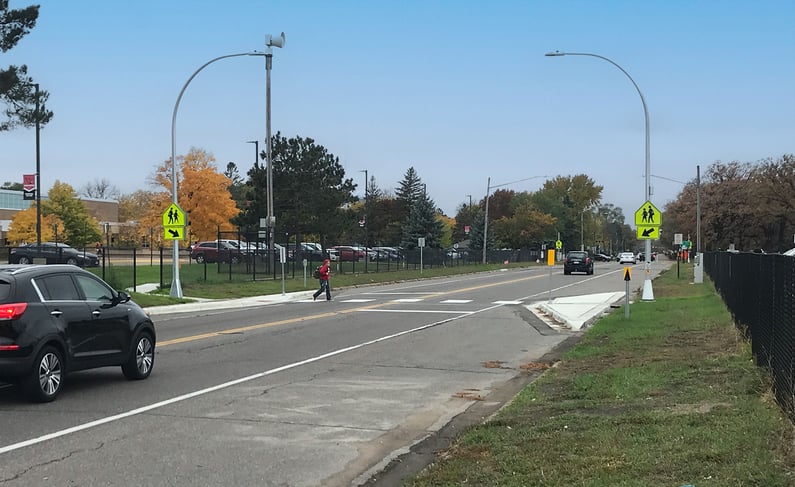
SEH experts like Erin Jordan and Heather Kienitz have also helped communities translate crossing policies into practice. Their work, specifically on Minnesota’s Best Practices for Pedestrian and Bicycle Safety, demonstrates how to implement crossing policies by applying standard best practices to build real safety improvements that support desired outcomes.
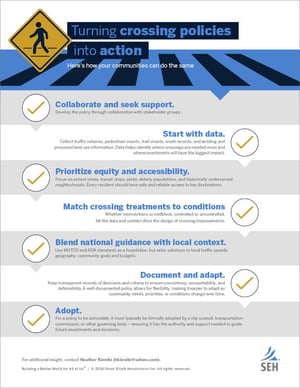
The key is turning policy into action. Here’s how your communities can do the same:
- Collaborate and seek support. Develop the policy through collaboration with stakeholder groups.
- Start with data. Collect traffic volumes, pedestrian counts, trail counts, crash records, and existing and proposed land use information. Data helps identify where crossings are needed most and where investments will have the biggest impact.
- Prioritize equity and accessibility. Focus on school zones, transit stops, parks, elderly populations, and historically underserved neighborhoods. Every resident should have safe and reliable access to key destinations.
- Match crossing treatments to conditions. Whether intersections or midblock, controlled or uncontrolled, let the data and context drive the design of crossing improvements.
- Blend national guidance with local context. Use MUTCD and ADA standards as a foundation, but tailor solutions to local traffic speeds, geography, community goals and budgets.
- Document and adapt. Keep transparent records of decisions and criteria to ensure consistency, accountability, and defensibility. A well-documented policy allows for flexibility, making it easier to adapt as community needs, priorities, or conditions change over time.
- Adopt. For a policy to be actionable, it must typically be formally adopted by a city council, transportation commission, or other governing body – ensuring it has the authority and support needed to guide future investments and decisions.
No two communities are the same, and their crossing policies shouldn’t be either. Each city’s geography, demographics, and infrastructure call for a tailored plan that defines funding strategies, treatment selection, and long-term maintenance. To remain effective, policies should be reviewed and refined as the community’s needs evolve and new technologies emerge.
By grounding decisions in data, national best practices, and community priorities, leaders can craft a policy that’s not only compliant and defensible, but also safer, more predictable, and adaptable for the future.
Download the Checklist
Not sure where to start? We can help you use this checklist to build safer, more connected communities.
Engaging the Stakeholders
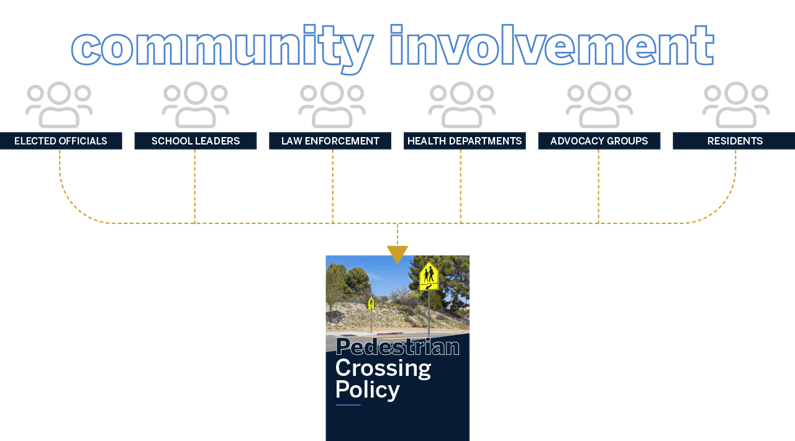
Even the most technically sound Pedestrian Crossing Policy can fall short if the community isn’t part of the process. Start by identifying the stakeholders, such as elected officials, school leaders, law enforcement, health departments, advocacy groups, and residents across the community. Each brings unique and valuable insights that help shape a policy grounded in real-world needs.
The key is to meet people where they are. Instead of relying solely on formal meetings, bring the conversation to the community: pop-up events, farmers' markets, school functions, and neighborhood gatherings provide opportunities for residents to share feedback in a comfortable setting.
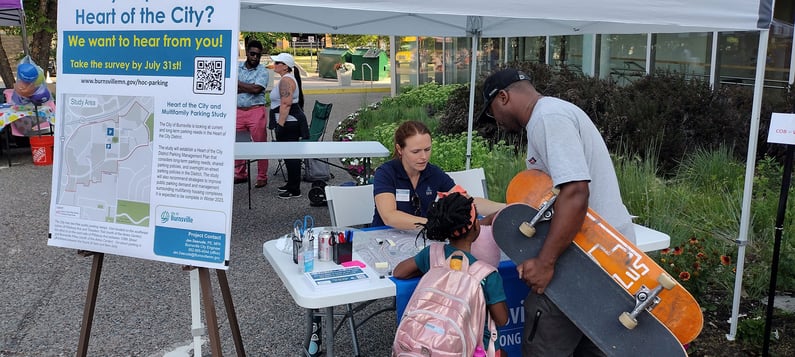
When the community has a voice, the policy becomes stronger and more effective. Diverse perspectives are captured, trust is built, and adoption becomes smoother. Residents feel ownership, leaders gain confidence, and the result is a policy that truly reflects the people it serves.
A Safer Future for All
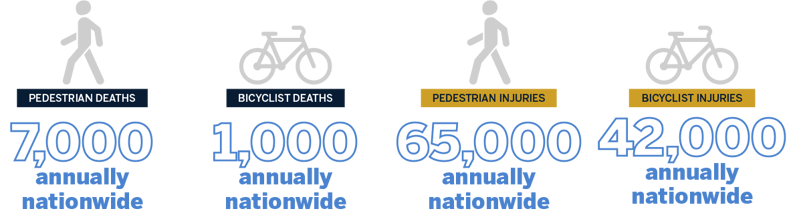
A Pedestrian Crossing Policy is more than a planning document – it’s a promise to your community. It ensures that every crossing, every decision, and every investment contributes to a safer, more connected network for people walking, biking, and rolling. It also gives leaders a transparent, defensible process they can rely on when responding to public concerns or making budget decisions.
Your residents deserve safe, predictable streets. A crossing policy is one of the most effective tools to deliver on that promise. Ready to get started? Let’s build a safer future together.
About the Experts
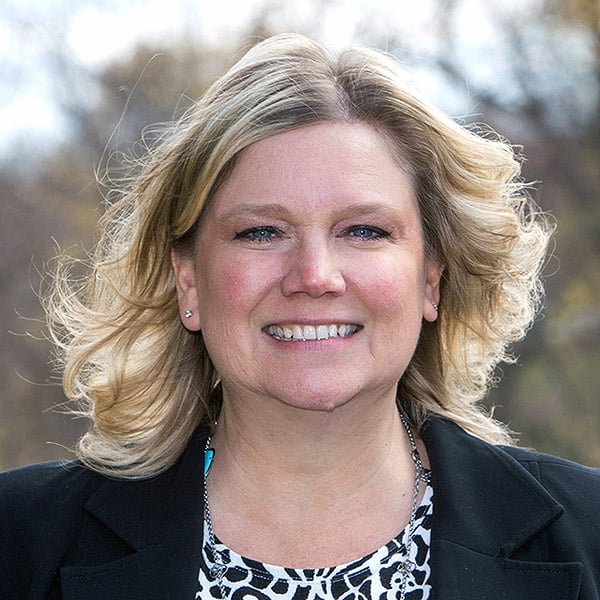
Heather Kienitz, PE*, is a multimodal market leader, senior traffic engineer, and SEH principal with nearly three decades of experience helping communities create safer, more connected streets. A Complete Streets advocate and co-author of both the ITE Crosswalk Policy Guide and Minnesota’s Best Practices for Pedestrian and Bicycle Safety, Heather brings national and state-level insight to pedestrian safety and policy development. She has supported MnDOT’s Complete Streets workshops and works with communities to design inclusive, context-sensitive transportation systems that retrofit and reconstruct pedestrian and bicycle infrastructure to meet modern standards for safety and accessibility.
*Registered Professional Engineer in MN

Erin Jordan, PE*, is a project manager and traffic engineer who specializes in multimodal transportation planning and design. She partners with communities to develop Traffic Safety Policies, Complete Streets improvements, and Safe Routes to School (SRTS) designs that make neighborhoods safer, more efficient, and more inclusive for all users. As a co-author of Minnesota’s Best Practices for Pedestrian and Bicycle Safety, Erin brings a deep understanding of how data-driven design and policy development can work together to create safer, more connected communities.
*Registered professional engineer in IA, MN, NE, WI
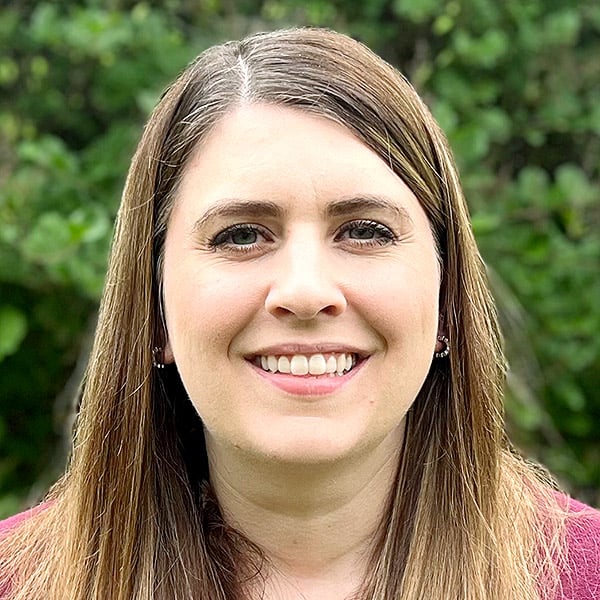
Krista Palmer, PE*, is a traffic engineer with experience completing a variety of traffic operations analysis and safety analysis tasks for county and MnDOT studies. She has completed transportation corridor, visioning, and multimodal planning studies to identify existing and future needs, developed and evaluated alternatives, and provided recommendations to stakeholders based on technical analyses and public engagement. She has supported communities to develop Safety Action Plans and pedestrian crossing policies that prioritize safety, accessibility, and equity.
*Registered Professional Engineer in MN