
.png?width=1014&height=1255&name=SEH_Logo_RGB%20(1).png)

{Brief}ly Speaking about what it really takes to compete for Safe Streets for All funding. Transportation planner Nate Day breaks down what’s changed, where communities fall short, and how to turn safety goals into fundable projects. From Action Plans to Implementation Grants, this episode focuses on the strategy, data, and partnerships that separate successful applications from the rest.
Note: The Safe Streets and Roads for All (SS4A) grant application deadline discussed in this episode has passed. However, the strategies shared around planning, data collection, stakeholder engagement, and developing competitive funding applications remain relevant for many transportation, infrastructure, and public safety grant opportunities.
Episode Transcript
Mollie (Host)
Welcome to {Brief}ly Speaking, the SEH podcast where we tackle big topics in architecture, engineering, and construction with quick expert insights. Safe, accessible streets aren't just nice to have anymore. They're a priority for communities of every size. And right now, there's real funding on the table to make them happen. The Safe Streets for All program is back with a new round of applications. But here's the reality. Funding is competitive, expectations are higher, and communities that aren't prepared could miss out. Joining us today is Nate Day, a transportation planner and project manager who works closely with communities to turn safety and mobility goals into real, fundable projects. His experience spans multimodal transportation planning, corridor studies, and environmental documentation. But what really stands out is his ability to connect the dots between planning, public input, and funding strategy. So Nate, welcome to {Brief}ly Speaking.
Nate (Guest)
Hey, thanks for having me, Mollie. Great to be here. Let's talk safe streets for all.
Mollie (Host)
Let's do it. We're going to start out simple, give a little background. What is Safe Streets for All and why is it such a big deal for communities right now?
Nate (Guest)
Sure, this is a federal program. At its core, Safe Streets for All or SS4A, this is the federal government finally putting some real money behind the idea that traffic deaths are preventable, not just accidents. but things we can actually design our way out of too. It's a big deal because small towns, counties, big cities, they can all get funding to either make a plan or actually build some of these safety projects that they have on their capital improvement plans. And with traffic fatalities still trending the wrong way, nationally, there's a lot of urgency behind this right now and funding.
Mollie (Host)
So this program has been around for a while. It's kind of a new wave of it here now. What's the difference or what's new in this latest round of applications compared to previous years?
Nate (Guest)
Yeah, so the bipartisan infrastructure law, it's coming to an end this year in 2026. So it's been five years already with a billion dollars allocated each year to this program. The biggest shift that I'm seeing this time around is less tolerance for vague ideas, I guess. Early rounds were a little more forgiving. Like "we want to improve safety" was enough. Now it's more like show me exactly where, show me why, show me what you're going to do about it. There's also more emphasis on measurable outcomes and actually implementing the projects, not just studying them. There's a new emphasis on public safety infrastructure too, like especially post crash care this round. In fiscal year 2025, the last solicitation, safety infrastructure like bike/ped improvements, those dominated. But in this year, DOT is really elevating emergency response and survivability after crashes as a funding priority. So a little different this time around.
Mollie (Host)
so it sounds like it started out much broader. And as the rounds have gone on, it's gotten more and more fine-tuned and strategic towards the goals that nationally we're seeing happen.
Nate (Guest)
Yeah.
Mollie (Host)
So that kind of does lead into my next question, which is we hear a lot about action plans versus implementation grants. Can you break down the difference and how communities should think about which path to pursue?
Nate (Guest)
so there's two options when pursuing this funding. One is an action plan. Think of it as we need a game plan for safety on our streets. We don't have one yet, so we need to develop that. The other option is the implementation grant. Kind of think of it as we know what the problem is, let's go fix it now. Let's actually build the infrastructure. If you don't have a solid data-backed safety plan yet, that meets all the criteria, I guess, of the SS4A program, which are eight criteria. Start with the action plan. If you already know your high crash corridors, you have a safety plan that's been reviewed by DOT and have projects lined up, go after implementation. But I guess trying to skip ahead without the groundwork or having a safety action plan in place already, I think that's where communities can get tripped up a little bit.
Mollie (Host)
Yeah, that makes sense. You mentioned one of the deciding factors between those two being having data backing it. What does good data actually look like in a competitive application that could help lead to one of those decisions?
Nate (Guest)
Yeah, good data isn't just a pile of numbers. We have to make sure it's targeted. So it's things like, where crashes are happening, not just totals. Who's affected? Is it pedestrians? Is it bikes? Is it certain neighborhoods? There's a whole range of things we can look at there. Also trends over time. That's a big thing to track too, and see if intersections or a corridor have been getting consistently worse through the years. And then ideally some sort of risk analysis, not just where crashes are happening, but where they're likely to happen next and kind of seeing what drives that. And again, good data is just data unless it can kind of get visual too. So bonus points if you can map it and make it visual. I know the reviewers love a good map.
Mollie (Host)
No, that makes a lot of sense. So essentially, the data is specific. We know exactly what's happening. We know how many crashes we're having. We know where the incidences are. So then that would lead to an implementation grant versus an action plan is, hey, we know we have a problem, but we're not quite sure the specifics of it.
Nate (Guest)
Yeah, you got it. That's exactly correct.
Mollie (Host)
All right. So sounds like proactive planning is the name of the game here for this grant. From what you're seeing, where do communities struggle the most when preparing for these applications?
Nate (Guest)
Honestly, it's probably just connecting the dots, starting at the basic level of obtaining that unique entity identifier or the UEI number. You need that. to apply for any of these grants. And that's assigned on sam.gov. I know a lot of communities have those, but if they're not used to applying for federal grants, you will need to do that. And it does take a few weeks. So that's your first step. Without that, the community cannot apply. I also think a lot of applications have good pieces. Some crash data, maybe a few project ideas, but they don't tell a clear story. I think the strongest applications will say, here's the problem, here's the data, here's the solution, here's what changes. If that chain breaks anywhere, reviewers really notice that and just select a different application.
Mollie (Host)
That's great advice. I want to jump back really quick to talking about the safety action plan. I just explained that is kind of the starting process for this. if you don't have that data, if you don't have a full picture of what you're dealing with, how important is it for communities to have a safety action plan in place before applying and, what if they don't have that?
Nate (Guest)
So do you need a safety action plan already? Well, the short answer for implementation grants, yes, you need one to apply. So if you don't have a safety action plan or a transportation safety action plan or any combination of words you want to call that plan, it's not a problem. That's exactly what the funding is for. So most communities are going to be better off starting there instead of rushing into projects without some sort of foundation in a plan. So start by getting that UEI number, then apply for safety action plan funding. And then when the plan is adopted and ready to go and you have the list of prioritized projects, that's when you can apply for implementation funding. So, it is a process.
Mollie (Host)
Okay, so it's not a dead end if you don't have one already. There's still steps you can take to apply.
Nate (Guest)
Yeah, this is the time to do it. May 26, 2026 coming up is the deadline. there's still time to get that UEI number and put in your application for a safety action plan.
Mollie (Host)
So as you said earlier, Safe Streets for All isn't just about identifying the problems. That helps, right? We like to have that in the applications, but it's more about the outcomes. So what kind of projects or strategies are most competitive right now? I know you mentioned that funnel of how they're getting more specific, but go a little bit more into detail on those.
Nate (Guest)
Yeah, so What kind of projects are competitive right now? The ones that actually move, I guess, the needle on serious injuries and fatalities, that's what DOT is looking to achieve here. So I guess think road diets, intersection redesigns, pedestrian crossings that actually feel safe. Speed management is a big one, not just signs, but actually designing. So the common theme is proven counter safety measures, which there's a giant list of those. Not experimental, not nice to have things, but things we know work.
Mollie (Host)
That sounds like great advice as well. So collaboration is another thing that we keep hearing about coming up with federal funding. Who should communities be partnering with to strengthen their applications?
Nate (Guest)
Great question. You know, there's a lot of people to coordinate with during these plans. More people than you think. I guess at a minimum, law enforcement, is a great one to coordinate with. EMS, fire, police, they know the roads probably better than anyone. So if there's issues perceived or real, they would have some input. Public health is a great one to align with walkability and locations that are maybe unsafe for pedestrians. Schools, I guess we've reached out to superintendents, principals. Those are great sources of information for where there might be safety issues on the roads in front of the schools or leading up to them. And then of course, the regional planning agencies who kind of oversee the whole town or county, big city that you're in. They have different priorities of linking regionally into those areas. So all great agencies to work with, and don't leave out the community itself either. I mean, there's groups that, are most impacted in these neighborhoods. So if it's the first time you talk to them after you get the grant, it's probably a little late. It's good. I mean, we still need to do public engagement during the plan, but it's a key to the plan and finding those real versus perceived safety issues. Additionally, I'd just like to say, letters of support go a long way. So if you can get those letters of support in from all of those agencies I just told you about, as well as others, those really help an application.
Mollie (Host)
Okay, Nate, this is why having a conversation with you is such a benefit before submitting these applications because all of those agencies and groups that you just listed make perfect sense in a safe streets application, right? Like you said, they know it better than anyone else. They know the streets. They're seeing firsthand the accidents, but I would never have thought to include police, fire, or schools. So that's why you're the expert and that's why it's great to bring you on board early on. Earlier you talked about the May 26, 2026 deadline. So it's coming up here quickly, but there is still time. What should communities be doing now if they want to be competitive in this cycle, if they're just starting out?
Nate (Guest)
Yeah, give me a call. I'll help you. But for real, the 2026 NOFO already was released. So There's been a couple weeks now of people getting applications together, and again, there's still time, May 26, 2026, but right now is probably the time to start pulling some crash data, identifying those high-risk corridors that are in your town, and line up partners. Like I said, those letters of support go a long way. Reach out to the community. They know the streets the best. and start thinking about your story and shaping it into a way that makes your community a little more unique than others, with these safety issues. The communities that win these grants were probably already 50 to 70% ready before the application even opened. So knowing that these opportunities come out really drives a lot of communities to start pre-planning to get these grants.
Mollie (Host)
Yeah. And I love, "call you!" That's exactly what they should do, reach out. Because knowing that other communities have been preparing for this, you can help get them up to speed a little bit quicker than doing it on their own. If a community did want to reach out to you, Nate, what's a good email for them to contact you at?
Nate (Guest)
Yeah, my email is nday@sehinc.com.
Mollie (Host)
And my last question here is a takeaway for our listeners. So if a city or county walks away from this conversation and does just one thing to improve their chances, what should it be?
Nate (Guest)
One thing. Well, one thing, make sure you have that UEI number. But aside from that, because a lot of them already do, just be specific. Know the difference between a successful application and an unsuccessful application. Being very specific. You don't want to say improve safety citywide. All right, that's pretty generic. You want to be very clear with objectives and numbers. Instead, something like reduce fatal and serious injury crashes by X percent on these three corridors using these treatments. So the more concrete we can make that, the easier it is for DOT to say yes to the funding.
Mollie (Host)
I love that advice. Safe Streets for All is more than just another grant program. It's a chance for communities to take a proactive approach to safety backed by real funding. But it's clear success comes from planning early, building the right partnerships, and aligning your strategy with what funding programs are actually looking for, being specific as Nate just said. A big thank you to Nate for breaking this funding opportunity down and helping us understand what it really takes to compete. Thanks for tuning in to {Brief}ly Speaking. If this episode helped you think differently about funding and safety, share it with a colleague or a community leader who's looking towards safer streets. And we'll see you next time.
About the Expert
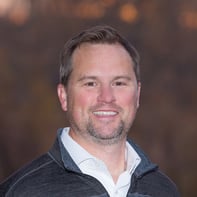
Nate Day is a Community Development Planner with SEH based in Madison, Wisconsin. He works with communities and organizations to identify opportunities, build partnerships, and advance initiatives that support long-term growth and success. Nate is committed to helping clients navigate complex challenges while developing practical solutions that create lasting value.